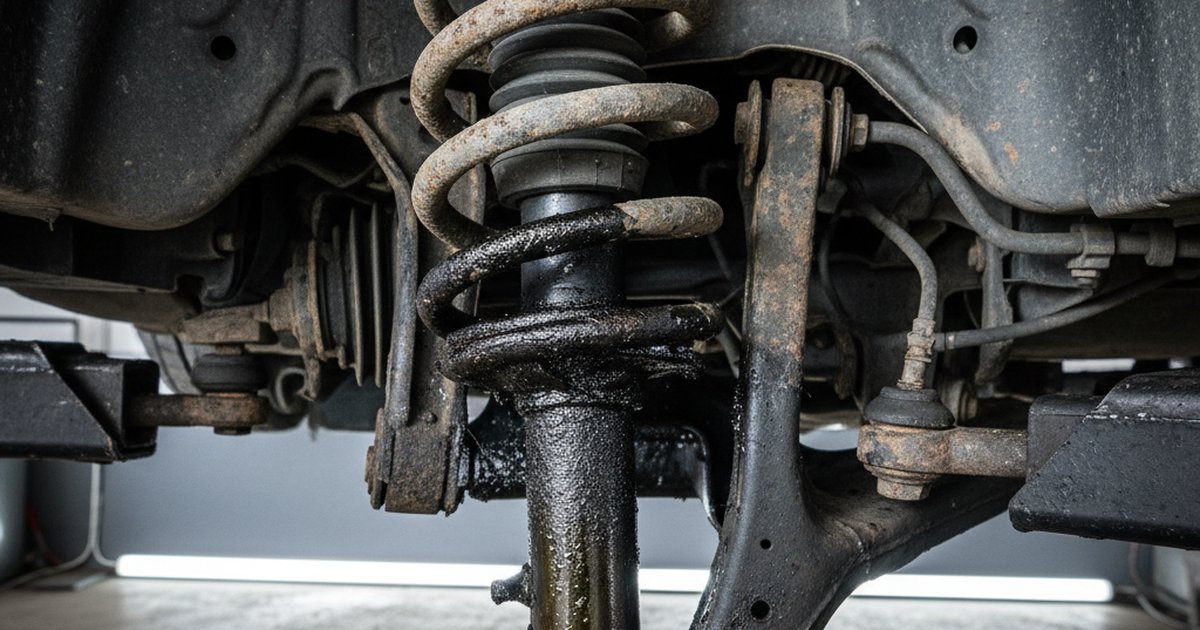
Suspension and spring defects are among the most common and expensive MOT failures facing UK motorists. Our analysis of 3,937,482 MOT tests across 40 car variants reveals a stark divide: some models suffer suspension-related failures at rates approaching 30%, while others barely register a fraction of a percent.
The data exposes a clear pattern. Budget crossovers and older European hatchbacks dominate the failure list, while newer mainstream models and premium cars demonstrate remarkable durability. The Ford EcoSport stands out as particularly problematic, with multiple model years claiming the top four spots. Meanwhile, recent Fiestas, Focuses and Hondas prove that modern engineering has largely conquered suspension durability.
These failures are not cheap to fix. Coil spring replacement typically costs £80-£150 per corner at independent garages, while CV boot splits can escalate from a £30 repair to a £200+ driveshaft replacement if caught too late. For used car buyers, understanding which models are vulnerable could save hundreds in unexpected repair bills.
TL;DR: Ford EcoSport models from 2014-2016 show suspension defect rates above 24%, driven by coil spring fractures and CV boot failures. Citroën DS3 and Alfa Romeo MiTo also perform poorly across multiple years. In contrast, 2018-2019 Fiestas, Focuses and premium models register suspension defects below 0.3%. Spring corrosion from road salt and pothole impact are the primary culprits.
Worst cars for this defect
Best cars for this defect
Why does the Ford EcoSport dominate the failure list?
The Ford EcoSport occupies four of the top five worst positions, a damning indictment of the model's suspension durability. Every variant from 2014 to 2016 registers defect rates between 20% and 28%. The 2014 petrol model is the worst offender, with defects appearing at typical mileages around 46,000 miles.
The EcoSport's problems stem from its design heritage. Built on an ageing platform originally developed for emerging markets, it combines relatively soft suspension with a high centre of gravity. This creates significant suspension loading, particularly through the front coil springs and anti-roll bar links. UK owners report frequent coil spring fractures, typically where the spring meets the mounting cups, caused by road salt penetrating the protective coating.
The modest annual mileage figures (around 6,000-7,000 miles per year across variants) suggest these are not high-mileage fleet cars being thrashed. They are ordinary family vehicles suffering from fundamental design weaknesses. The low reliability scores (379-429 out of 1000) confirm that suspension issues are just part of a broader pattern of quality problems with this model.
For context, even the 2019 petrol EcoSport appears in our best performers list with just 0.26% defect rate. Ford clearly addressed the suspension issues in later iterations, but the 2014-2016 models remain vehicles to avoid on the used market.
What links the Citroën DS3 and Alfa Romeo MiTo failures?
The Citroën DS3 and Alfa Romeo MiTo both feature heavily in the worst performers, with defect rates consistently above 20% across model years from 2010 to 2015. These stylish hatchbacks share a common weakness: ageing PSA and Fiat group platforms with inadequate corrosion protection on suspension components.
The DS3 is particularly vulnerable, with the 2012 diesel variant showing defects at just 70,000 miles typical mileage. Owners consistently report fractured rear coil springs and perished anti-roll bar bushes. The higher annual mileage (around 7,300 miles per year) suggests these cars are driven more than EcoSports, but the failure rates remain alarmingly high even accounting for usage.
The MiTo's problems concentrate on CV boot failures and lower arm bushes. The 2013 diesel variant shows defects appearing around 64,000 miles. Both models use relatively complex multi-link rear suspension designs that increase the number of potential failure points compared to simpler torsion beam setups.
Poor reliability scores across the board (the DS3 diesel variants score just 196-239 out of 1000) indicate these suspension issues are symptomatic of broader quality problems. The combination of Italian or French manufacturing quality standards from a decade ago, combined with UK road salt exposure, creates a perfect storm for suspension deterioration.
What causes coil spring fractures?
Coil spring fractures rarely happen on their own. The DVSA MOT data shows a clear pattern: springs fail where road salt use is heaviest and winter maintenance most intensive. Scottish and northern English councils apply up to 40 tonnes of salt per mile of road each winter, creating a corrosive environment that attacks protective coatings.
The failure mechanism is consistent. Road salt spray penetrates microscopic cracks in the paint or powder coating protecting the spring steel. Once inside, it accelerates corrosion through freeze-thaw cycles. The corroded section becomes brittle, and eventually fractures under normal loading, typically where the spring makes tightest coils at the end sections.
Pothole impact accelerates the process. When a wheel drops into a hole and rebounds sharply, the suspension compresses violently. If a spring is already weakened by corrosion, this shock loading can cause immediate fracture. The combination explains why older cars with higher mileage in northern regions fail MOTs more frequently on suspension grounds.
Modern premium manufacturers combat this through better quality steel alloys, multiple coating layers, and more aggressive rust-proofing. The data confirms this works: BMW, Honda and Toyota models consistently show defect rates below 0.3%, even at high mileages approaching 70,000 miles.
Why are CV boot failures so common?
CV (constant velocity) boot failures account for a significant proportion of suspension-related defects. These rubber or synthetic boots protect the joints that allow drive shafts to transmit power while moving with the suspension. When they split, grease escapes and contaminants enter, leading to expensive joint failure.
The problem is worst on older front-wheel-drive cars with higher mileage. The Peugeot 207 and Fiat Punto, both featuring in our worst performers, typically show CV boot splits around 60,000-70,000 miles. The rubber degrades through constant flexing, ozone exposure and temperature cycling. Add UK road salt exposure and the lifespan shortens further.
The cost escalation is brutal. Catch a split boot early and an independent garage will replace it for £30-£50. Ignore it for 6-12 months and the joint wears out, necessitating complete driveshaft replacement at £200-£300. Many cars fail their MOT not on the boot split itself, but on the clicking or knocking noise from the damaged joint underneath.
Visual inspection before purchase is critical. Look for grease spattering around the inner wheel rim and on suspension components. Run your hand around the boot itself checking for splits. Listen for clicking sounds when turning at full lock. These simple checks can save considerable expense on supposedly bargain used cars.
How do the best and worst compare?
| Car | Defect Rate | Earliest Mileage | Annual Use |
|---|---|---|---|
| Worst Performers | |||
| Ford EcoSport 2014 Petrol | 28.57% | 46,182 miles | 6,278 miles/yr |
| Ford EcoSport 2015 Diesel | 26.79% | 52,194 miles | 6,944 miles/yr |
| Ford EcoSport 2014 Diesel | 26.50% | 55,395 miles | 6,868 miles/yr |
| Ford EcoSport 2015 Petrol | 24.46% | 43,209 miles | 5,862 miles/yr |
| Fiat Panda 2010 Diesel | 22.98% | 60,730 miles | 5,912 miles/yr |
| Best Performers | |||
| Ford Fiesta 2019 Petrol | 0.16% | 30,205 miles | 6,100 miles/yr |
| Ford Focus 2019 Petrol | 0.18% | 34,117 miles | 7,100 miles/yr |
| Mini Cooper 2019 Petrol | 0.21% | 27,775 miles | 5,710 miles/yr |
| Audi A1 2019 Petrol | 0.23% | 31,339 miles | 6,854 miles/yr |
| Ford Fiesta 2018 Petrol | 0.25% | 34,874 miles | 6,068 miles/yr |
The contrast is remarkable. The worst cars show suspension defects at rates 100-180 times higher than the best performers. Age plays a role, but not the defining one. The 2014-2016 EcoSports are younger than many of the 2018-2019 best performers, yet fail at vastly higher rates even at lower mileages.
Annual mileage patterns are similar between best and worst groups, ruling out usage intensity as the primary factor. The difference comes down to design quality, materials selection and manufacturing standards. Ford improved dramatically between the 2016 and 2018 model years across its range, while premium brands maintained consistently low defect rates throughout.
Does location affect suspension failure rates?
While our database provides national MOT data rather than regional breakdowns, RAC breakdown statistics confirm that suspension failures show significant geographic variation. Scottish councils use approximately 30% more road salt per mile than southern English authorities, accelerating corrosion on vulnerable components.
Urban areas with more frequent speed humps and poor road surfaces show higher rates of spring fracture and shock absorber failure. The constant low-speed impacts stress suspension components differently to motorway driving. Cars driven predominantly in cities accumulate suspension damage disproportionate to their recorded mileage.
Coastal regions present their own challenges. Salt spray from the sea compounds the effects of road salt, particularly affecting cars parked outdoors near the shoreline. The combination of high humidity and salt exposure accelerates corrosion on any exposed metal surfaces, including spring coils and suspension arms.
This geographic variation matters for used car buyers. A 2015 EcoSport previously registered in Cornwall or Scotland represents a higher risk than an identical vehicle from Surrey or Oxfordshire. Check the registration history and service records for clues about previous location and storage conditions.
What should you check when buying?
A thorough pre-purchase inspection can identify suspension problems before they become your financial burden. Start with a visual inspection of all four coil springs. Use a torch to examine the entire surface, looking for rust, particularly at the ends where springs meet their mounting cups. Surface rust is acceptable, but any visible cracks or fractures are deal-breakers.
Check all CV boots by running your hand around their circumference. Feel for splits, tears or missing clamps. Look for grease spattering on the inside of wheels and on nearby suspension components, indicating a boot has already failed and is throwing lubricant around. This grease attracts road dirt and accelerates wear on the exposed joint.
Test drive over speed bumps and rough surfaces at various speeds. Listen for knocking, clunking or rattling from the suspension. A single thud over bumps suggests worn dampers or bushes. Rhythmic clicking when turning at full lock indicates CV joint wear. These noises are not subtle and clearly audible with the windows down.
Request a printout of the car's full MOT history from the seller or check it yourself at gov.uk MOT checker. Look for patterns of suspension advisories or repeated failures. A car that has required multiple spring or CV boot replacements will likely continue that pattern. Factor this into your negotiation or walk away.
For higher-risk models like the EcoSport, DS3 or MiTo, consider paying for a professional inspection. The AA charges around £150-£200 for a comprehensive vehicle inspection. That investment is worthwhile given the potential £500-£1000 cost of addressing multiple suspension failures shortly after purchase.
What do suspension repairs actually cost?
Coil spring replacement at an independent garage typically costs £80-£150 per corner including parts and labour. Fronts are usually cheaper than rears due to easier access. Main dealers charge £150-£250 per corner, offering little value advantage given that spring quality from reputable aftermarket suppliers matches OEM standards.
CV boot replacement costs £30-£50 if caught early while the joint remains undamaged. Wait until the joint itself wears out and you are facing driveshaft replacement at £200-£300 per side. The labour time difference is significant: 30 minutes for a boot versus 2-3 hours for a complete driveshaft swap including hub nut removal and re-torquing.
Anti-roll bar drop links are frequent failure items on high-defect models. Expect £40-£80 per side for replacement. Bushes for the anti-roll bar itself cost £80-£120 for a full set fitted. Lower arm bushes run £100-£200 per side if they require pressing out and in, though some arms come with bushes pre-fitted at similar total cost.
Shock absorbers vary wildly by vehicle. Budget hatchbacks might cost £60-£100 per corner for quality aftermarket units, while premium cars can reach £200-£300 each for OEM-spec replacements. Always replace in pairs (both fronts or both rears) to maintain balanced handling and avoid rapid wear on the new component.
For a worst-case scenario on a high-defect model, budget £600-£1000 to address comprehensive suspension issues: two springs, two CV boots or driveshafts, drop links and bushes. This realistic figure should inform your maximum purchase price for any of the vehicles in our worst performers list, particularly if they are approaching or exceeding their typical defect mileage.
Do certain designs make springs more vulnerable?
Ride height and suspension travel significantly affect spring durability. The EcoSport's relatively high ground clearance means longer springs with more coils and greater exposed surface area. This increases vulnerability to road salt spray and provides more potential fracture points. Lower, stiffer sports suspensions typically use shorter, thicker springs that prove more resistant to corrosion-induced failure.
Multi-link rear suspension designs, favoured by premium manufacturers and some European hatchbacks, create more complexity and potential failure points. However, the data shows this need not translate to poor reliability. Honda and BMW both use sophisticated multi-link setups yet achieve defect rates below 0.3%. The difference is materials quality and manufacturing standards rather than fundamental design philosophy.
Spring rate matters. Very soft springs (common on comfort-oriented family cars) undergo greater compression and extension during normal driving, accelerating fatigue. Firmer sports suspension springs work less hard under typical conditions, potentially extending service life. However, they transmit more impact force to mounting points and bushes, creating different failure modes.
Protective coatings make the biggest difference. Modern e-coating processes and powder coating provide comprehensive corrosion protection. Older paint-based systems on budget models from the 2010s prove inadequate for UK conditions. Once corrosion establishes a foothold, spring failure becomes inevitable. This explains why age and quality tier matter more than basic suspension architecture in predicting reliability.
Want to know if the car you're viewing has a history of this? Its MOT record shows every advisory and failure, free to check.
Frequently asked questions
How can I tell if a car has suspension problems during a test drive?
Drive over speed bumps at 10-15mph and listen for knocking or clunking sounds. Turn at full lock in a car park and listen for rhythmic clicking (indicates CV joint wear). The car should feel composed over bumps, not bouncy or harsh. Any unusual noises warrant professional inspection before purchase.
Are suspension failures more common on older or newer cars?
Our data shows design quality matters more than age. 2014-2016 EcoSports fail at 24-28% while 2018-2019 Fiestas register just 0.16-0.25%. Premium brands maintain low defect rates regardless of age. Cheap manufacturing and poor corrosion protection create problems, not simply years on the road.
How much does it cost to replace a coil spring?
Independent garages typically charge £80-£150 per corner including parts and labour. Main dealers cost £150-£250. Always replace springs in pairs (both fronts or both rears) for balanced handling. Budget £300-£500 for a typical front spring replacement job at an independent.
Should I avoid all Ford EcoSports or just certain years?
Avoid 2014-2016 models which show suspension defect rates above 24%. The 2019 petrol EcoSport appears in our best performers with just 0.26% defect rate, suggesting Ford significantly improved quality. Always check full MOT history before buying any used EcoSport.
Can I drive with a split CV boot?
You can drive temporarily, but damage accumulates rapidly. Once the protective grease escapes, contaminants enter the joint causing wear. A £30 boot replacement becomes a £200-£300 driveshaft job within months. Get it fixed immediately to avoid expensive escalation.
Our Verdict
Suspension and spring failures represent a significant hidden cost for used car buyers, particularly those attracted to budget crossovers and older European hatchbacks. The data clearly shows that some models suffer chronic problems while others deliver exceptional durability. Your buying decision should reflect this reality.
Before committing to any purchase, check the vehicle's complete MOT history using PlateInsight. Our database of 261 million MOT records provides detailed failure patterns, mileage progression and repair history. New users receive 5 free vehicle checks to assess potential purchases. For vehicles in the high-risk categories identified here, that information could save you thousands in unexpected repair costs. Visit PlateInsight today and make your next used car purchase with confidence backed by real data, not dealer promises.
You might also like
Check Any Vehicle's Full History
MOT results, mileage timeline, AI health score, and market valuations. New users get 5 free credits.