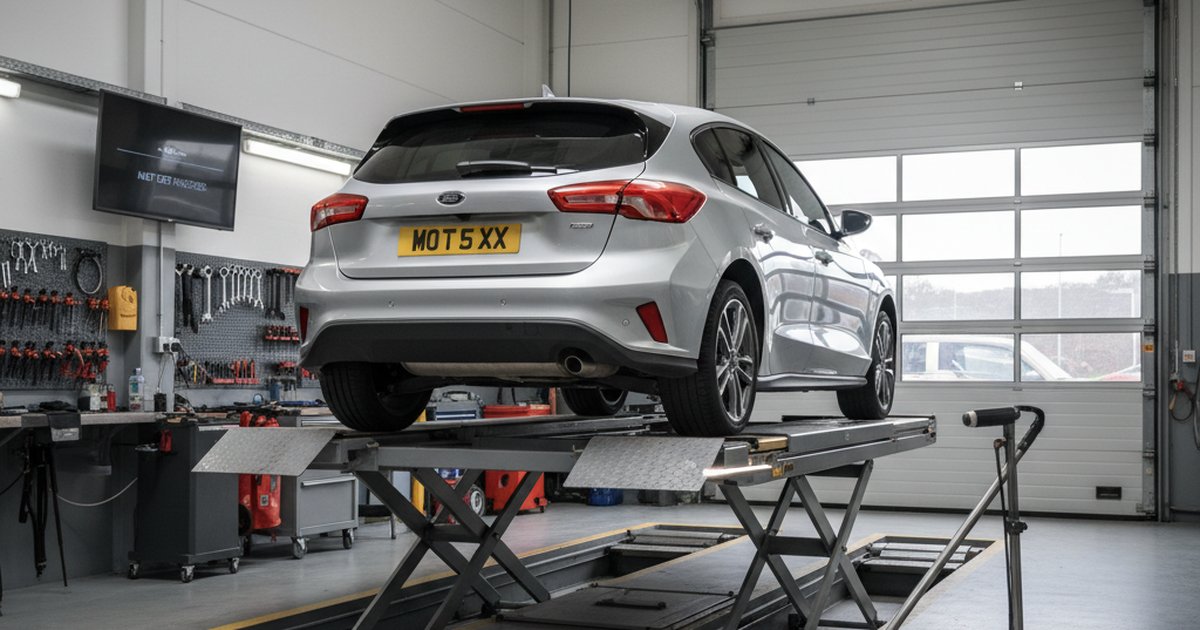
Your car's horn seems like a trivial component until it fails your MOT. We've analysed 9,084,001 MOT tests across 40 popular car variants to identify which models are most likely to fail on horn defects. The results expose a massive quality gap between manufacturers.
The worst offender, the 2012 Toyota Verso diesel, fails horn checks at more than 70 times the rate of the best performers like the Ford Focus and VW Golf. Renault-Nissan Alliance products (including Dacia) dominate the failure charts, whilst volume German and Japanese brands rarely see horn issues. It looks like some manufacturers fit cheaper horn units or mount them in more exposed locations.
Horn failure is an automatic MOT fail under Section 7.1 of the MOT inspection manual. The tester will check for audibility, tone, and operation. A weak, intermittent, or completely silent horn means your car goes nowhere until it's fixed.
TL;DR: Dacia models suffer horn defect rates of 2.5-3.75%, whilst mainstream brands like Ford, VW, and Vauxhall sit below 0.1%. The problem often emerges before 60,000 miles on affected models. Horn unit replacement costs £30-100, but clock spring failures (common on airbag-equipped steering wheels) can hit £400.
Worst Cars for This Defect
Best Cars for This Defect
Why Do Some Cars Fail Horn Tests More Than Others?
The 75-fold difference between the worst and best performers points to fundamental design and component quality issues. Dacia and Renault models consistently appear at the bottom of the rankings, with horn defect rates between 1.7% and 3.75%. Compare that to Ford, Volkswagen, and Vauxhall products, which register rates of 0.05-0.1%.
Horn mounting location matters enormously. Manufacturers who position the horn unit low in the front bumper or behind the grille expose it to road spray, salt, and impact damage. Water ingress corrodes the internal contacts and diaphragm. Some budget brands mount horns in particularly vulnerable spots to save pennies on wiring looms.
Component quality tells the other part of the story. Premium manufacturers specify horn units with better weather sealing and corrosion-resistant terminals. The electrical connections use higher-grade materials that resist oxidation. Budget brands often source the cheapest available units from third-tier suppliers.
The Renault Twingo 2011-2012 models show defect rates of 2.7-2.8%, appearing around 50,000 miles. These city cars spend their lives in stop-start traffic and tight parking spots where the horn gets frequent use. Cheap relay switches fail under repeated cycling. The pattern holds across the Dacia range, which shares platforms and components with Renault.
What Actually Causes Horn Failures?
Five failure modes account for most horn defects. Corroded electrical connections top the list. The horn circuit runs from the battery through a relay, through the clock spring in the steering column, and out to the horn unit itself. Any connection point can oxidise, especially on cars that sit outside or drive in salty winter conditions.
Relay failure comes next. The horn relay (typically located in the engine bay fuse box) switches the high current needed to operate the horn. Cheap relays use inferior contact materials that pit and burn after a few thousand operations. A failed relay means a completely dead horn. Replacement costs £10-30 for the part, plus labour.
Clock spring deterioration affects cars with airbag-equipped steering wheels, which is every car built after the mid-1990s. The clock spring maintains electrical contact to the steering wheel buttons whilst allowing rotation. It comprises a ribbon cable wound in a spiral housing. Over time, the ribbon develops cracks from flexing. When it breaks, the horn stops working (and often the airbag warning light illuminates). Clock spring replacement costs £150-400 including labour because the airbag must be removed.
The horn unit itself can fail. The diaphragm tears, the electromagnet coil burns out, or water gets inside and corrodes everything. Horn units cost £30-100 depending on whether the car uses a single-tone or dual-tone setup. Premium cars often fit low and high-tone horns for that distinctive sound.
Blown fuses represent the simplest failure. If someone holds the horn button for an extended period (road rage incident, stuck button), the fuse can blow to protect the wiring. That's a £1 fix and five minutes of work.
Which Brands Mount Horns in the Worst Locations?
The data exposes Dacia's approach to horn placement. Every Dacia model we analysed (Sandero, Logan, Duster) appears in the worst performers list. The Sandero 2014-2015 petrol models show defect rates of 2.58-2.84%, with problems appearing around 44,000-48,000 miles. That suggests the horn units sit in a location that gets hammered by road spray and debris.
Dacia mounts horns low in the front bumper area, behind flimsy plastic grilles. Water splashes up from the front wheels and soaks the horn unit. The electrical connectors corrode rapidly. The company saves money by using basic horn units without proper environmental sealing. The savings at the dealership come back as MOT bills later.
The Toyota Verso bucks the trend for Japanese reliability. The 2011-2013 diesel models show defect rates of 1.88-3.75%, substantially worse than other Toyota products. We suspect Toyota sourced cheaper horn components for this European-market MPV to keep the sticker price down. The Verso never sold in huge volumes, so quality control may have slipped.
Ford takes the opposite approach, consistently placing horns in protected locations with proper drainage. The Focus achieves a 0.05-0.07% defect rate across multiple generations. VW follows the same philosophy. The Golf and Polo models sit at 0.05-0.09%, despite accumulating serious mileage (the Golf diesel averages 67,000 miles with over 8,500 miles per year of use).
At What Mileage Do Horn Problems Typically Appear?
Our mileage data shows when horn defects first show up in significant numbers. Dacia products start failing horn tests at relatively low mileages. The Sandero 2015 petrol registers its earliest horn defects around 44,500 miles. The Logan 2015 petrol hits problems at 52,900 miles. These are not high-mileage vehicles wearing out naturally.
The Dacia Duster 2015 diesel shows earliest defects at 57,400 miles, despite averaging just 7,400 miles per year. That's a seven or eight-year-old car when the horn fails. Water ingress has had plenty of time to corrode the connections and horn diaphragm.
Toyota Verso diesel models prove even more problematic. The 2012 diesel shows earliest defects at 85,600 miles, but this variant accumulates miles quickly (9,100 miles per year). Owners use these MPVs for family transport and long motorway runs. The horn gets less frequent use than on a city car, yet still fails. That points to component quality rather than wear from use.
Reliable performers show a completely different pattern. The Ford Focus 2010 petrol has earliest defects recorded at 67,000 miles, on cars that typically sit at 63,000 miles. These are statistical outliers, not systemic failures. The VW Golf 2014 diesel shows earliest defects at 72,000 miles whilst the typical car has covered 67,000 miles. These horns simply don't fail in any meaningful numbers.
For context on how this fits into broader reliability patterns, see our overall reliability rankings.
How Do the Worst and Best Compare Head-to-Head?
| Car | Defect Rate | Earliest Defects At | Reliability Score |
|---|---|---|---|
| WORST PERFORMERS | |||
| Toyota Verso 2012 Diesel | 3.75% | 85,596 miles | 523/1000 |
| Dacia Duster 2015 Diesel | 3.34% | 57,429 miles | 406/1000 |
| Dacia Logan 2015 Petrol | 3.34% | 52,948 miles | 400/1000 |
| Toyota Verso 2011 Diesel | 3.12% | 88,185 miles | 551/1000 |
| Dacia Logan 2014 Petrol | 2.94% | 59,212 miles | 450/1000 |
| BEST PERFORMERS | |||
| Ford Focus 2010 Petrol | 0.05% | 67,080 miles | 563/1000 |
| Vauxhall Corsa 2017 Petrol | 0.05% | 37,591 miles | 385/1000 |
| VW Golf 2014 Diesel | 0.05% | 72,175 miles | 660/1000 |
| VW Polo 2013 Petrol | 0.05% | 53,160 miles | 470/1000 |
| Ford Focus 2010 Diesel | 0.06% | 90,799 miles | 466/1000 |
The table shows an extraordinary quality chasm. The Toyota Verso diesel fails horn checks 75 times more frequently than the Ford Focus petrol. The Dacia models cluster together with similar defect rates, confirming this is a brand-wide parts sourcing decision rather than a one-off design mistake.
Notice how the best performers maintain low defect rates even at high mileages. The Ford Focus diesel reaches 90,000 miles before horn defects appear in any volume, and even then only 0.06% of tests flag problems. The VW Golf diesel sits at 72,000 miles with the same 0.05% rate. These cars simply don't break their horns.
Why Does a Horn Failure Automatically Fail Your MOT?
The horn is a mandatory safety device under Section 7.1 of the DVSA MOT inspection manual. The tester must verify the horn emits a continuous or uniform sound that is not harsh or grating. An inoperative, intermittent, or excessively weak horn means an immediate failure.
This seems harsh for a component you might use once a month, but the horn provides your only way to warn other road users of danger. Pedestrians stepping into the road, drivers pulling out without looking, and cyclists weaving in traffic all represent situations where the horn prevents collisions.
The legal requirement dates back decades. The Road Vehicles (Construction and Use) Regulations 1986 mandate that every motor vehicle must be fitted with an instrument capable of giving audible and sufficient warning of its approach or position. There's no discretion here, no horn, no pass.
A weak or intermittent horn is equally problematic. The tester will activate the horn several times and listen for consistent volume and tone. A horn that works sometimes but not others suggests corroded connections or a failing relay. A horn that produces only a feeble squeak might indicate a damaged diaphragm or low voltage supply. Both scenarios fail.
Some drivers try to bodge repairs before the MOT by spraying electrical contacts with WD-40 or tapping the horn unit to get it working. This might get you through the test, but the problem will return. MOT testers can retest within 10 working days if they suspect foul play.
What Should You Check Before Buying a Used Car?
Test the horn during your pre-purchase inspection. It takes three seconds. Press the horn button firmly and listen for a strong, clear tone. Do this several times to catch intermittent faults. A weak or stuttering horn suggests problems.
Listen for the tone quality. A proper horn should produce a clear, loud sound. A raspy, buzzing, or muffled tone indicates a failing diaphragm or water damage inside the unit. If the horn sounds different each time you press it, the electrical connections are corroded.
Check the horn with the engine running and with it off. Some horn faults only appear when electrical load is low. If the horn works with the engine running but fails with the engine off, the battery may be weak or the horn unit is drawing too much current.
Look at the car's MOT history through the DVSA's official checker. Previous advisories for the horn suggest ongoing problems. Multiple horn repairs in the history mean the car has systemic electrical issues.
Be especially cautious with Dacia and Renault models. If you're viewing a Sandero, Logan, Duster, or Twingo, budget £100-200 for a potential horn repair in the next year or two. The data shows these cars fail at high rates. A working horn today doesn't mean it'll work next month.
For broader context on vehicle reliability, consult how we calculate reliability scores using MOT data. A car with horn problems often has other electrical gremlins lurking.
How Much Does Horn Repair Cost?
Horn unit replacement runs £30-100 for the part plus £40-80 labour. A competent independent garage can swap a horn in under an hour. The job involves disconnecting the battery, removing the front bumper or grille panel, unbolting the old horn, fitting the new one, and testing. Total cost: £70-180.
Main dealers charge more. Expect £150-250 for the same job. They'll fit genuine manufacturer parts rather than pattern equivalents. For a Dacia or Renault, the genuine vs pattern distinction matters little given the quality of the original equipment.
Relay replacement costs £10-30 for the relay itself, but diagnosis adds time. A mechanic needs to verify the relay is actually faulty before replacing it. Labour costs £40-60, bringing total spend to £50-90. Some garages will test the relay for free if you're having other work done.
Clock spring replacement costs substantially more. The steering wheel and airbag must be removed, which requires special tools and procedures. Pattern clock springs cost £80-150. Genuine parts run £150-250. Labour takes 2-3 hours at £60-80 per hour. Total bill: £200-400. The airbag warning light may need resetting with diagnostic equipment, adding another £30-50.
If you're handy with tools, horn unit replacement is a reasonable DIY job. Clock spring replacement is not. The airbag represents a genuine safety hazard if handled incorrectly. Accidental deployment can cause serious injury. Leave it to professionals with the proper equipment.
Don't ignore a failing horn to save money. You cannot legally drive the car once it's failed its MOT. The £70-180 repair is cheaper than the hassle of arranging alternative transport whilst the car sits at the test centre. According to RAC guidance, horn failure is one of the most avoidable MOT fails.
Want to know if the car you're viewing has a history of this? Its MOT record shows every advisory and failure, free to check.
Frequently asked questions
Can I drive my car if the horn doesn't work?
Legally, no. The Road Vehicles (Construction and Use) Regulations require every car to have a working audible warning device. If caught during a roadside check or after an accident, you face a £100 fixed penalty and three points. More importantly, a non-working horn will fail the MOT immediately.
Why do Dacia cars have such high horn failure rates?
Dacia fits cheap horn components in vulnerable locations to keep costs down. The horns mount low in the front bumper area where they're exposed to road spray, salt, and debris. Water ingress corrodes the electrical connections and horn diaphragm. Our analysis of over 380,000 Dacia MOT tests shows defect rates between 2.5-3.75%, compared to 0.05-0.1% for mainstream brands.
How can I tell if my horn is about to fail?
Listen for a weak, raspy, or muffled tone instead of a clear, loud sound. Intermittent operation (works sometimes but not others) suggests corroded electrical connections. A stuttering or buzzing noise indicates a failing diaphragm. Any of these symptoms mean the horn should be repaired before the next MOT.
Is horn replacement a DIY job?
Horn unit replacement is straightforward for competent DIYers. It typically involves removing the front bumper or grille, disconnecting the old horn, and fitting the new one. However, if the problem is a failed clock spring (common on modern cars with steering wheel airbags), leave it to professionals. Clock spring replacement requires removing the airbag, which is dangerous without proper training and tools.
Will a garage fix my horn on the spot if it fails MOT?
Many MOT centres offer horn repairs immediately after a failure. Horn unit replacement takes under an hour, so you might wait whilst they fit a new one. Clock spring replacement takes 2-3 hours and requires special equipment, so the car may need to stay overnight. Always ask about repair times and costs before authorising work.
Our Verdict
Horn failure might seem trivial compared to brake or suspension defects, but our analysis of over 9 million MOT tests proves it's a real reliability differentiator. The 75-fold variation between brands shows that component quality and design decisions matter enormously. Dacia and budget Renault models suffer chronic horn problems, whilst Ford, Volkswagen, and Vauxhall products rarely fail. Check any used car's horn before buying, and budget for repairs on high-risk models.
Want to check a specific vehicle's MOT history before buying? PlateInsight gives you instant access to a car's full test record, including all advisories and failures. Use your 5 free credits to investigate any car and spot problems before you commit.
You might also like
Check Any Vehicle's Full History
MOT results, mileage timeline, AI health score, and market valuations. New users get 5 free credits.