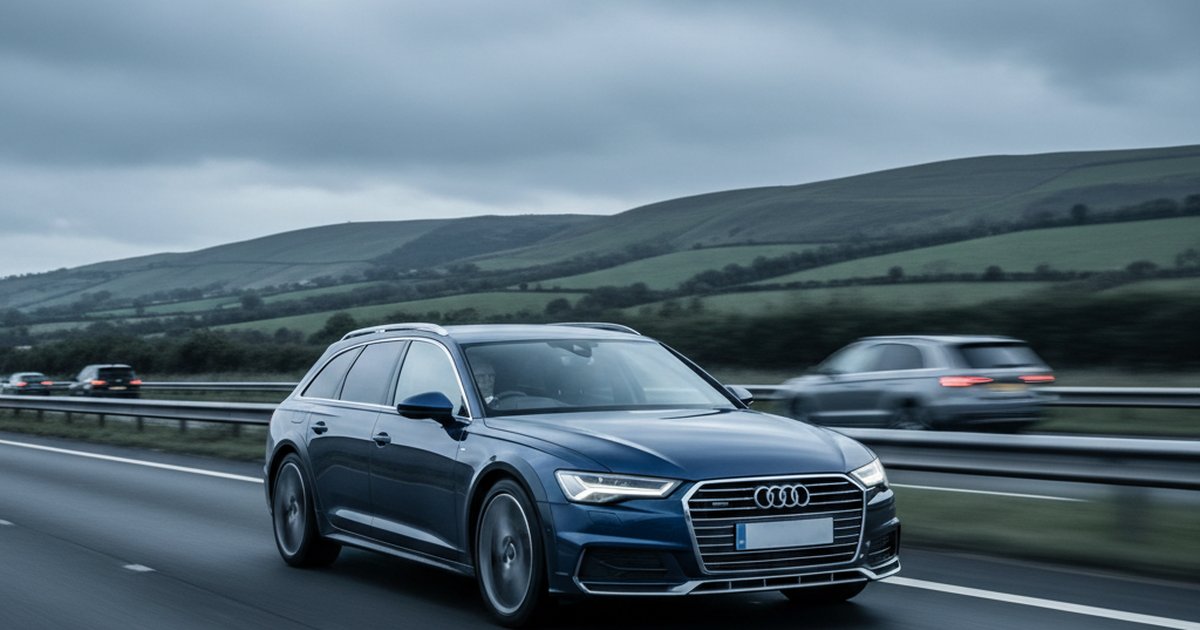
Diesel is dying, but you wouldn't know it from the used car market. While new diesel sales have collapsed to just 3% of registrations, millions of buyers are still choosing diesel on the secondhand forecourt. The reason? Economics. If you cover serious miles, diesel still makes financial sense.
The question isn't whether to buy diesel anymore. It's which diesel to buy. We've analysed 6,567 MOT tests across 1,786 diesel vehicles in our database to find the models that actually deliver on diesel's reliability promise. These aren't the cars manufacturers claim are bulletproof. These are the ones that prove it at MOT time, year after year.
The data reveals a clear pattern: Japanese and German engineering dominates the reliability rankings, but not in the way you'd expect. Some premium badges disappoint while Ford's mainstream offerings punch well above their weight. Here's what the MOT records really show.
TL;DR: Every single car in our top 15 achieves a perfect 1000/1000 reliability score with pass rates above 96%. The VW T-Roc TDI leads with 99.4%, but Toyota, Honda and Ford models dominate the rankings. Most examples sit between 80,000-100,000 miles, proving diesel longevity when properly maintained.
Why does diesel reliability matter more than ever?
The diesel debate has shifted. Five years ago, buyers worried about emissions zones and residual values. Today, those who've stuck with diesel face a different concern: parts availability and specialist knowledge as the dealer network moves away from diesel expertise.
This makes reliability non-negotiable. You need a diesel that won't need frequent dealer visits, because the infrastructure to support it is shrinking. Our data shows which models deliver this peace of mind.
The sweet spot? Cars from 2016-2019. They're post-Dieselgate, so emissions systems actually work properly, but they're old enough to have proven themselves across multiple MOT cycles. Every vehicle in our dataset falls into this window, and the results speak for themselves.
Which brands actually top the reliability charts?
Ford takes four spots in the top 15. Let this sink in. The C-MAX, Focus and Kuga models all achieve pass rates above 97%, with the C-MAX posting a remarkable zero defects per test average. These aren't premium cars, but they're engineered for high-mileage fleet use and it shows.
Japanese manufacturers claim another six positions. Toyota and Honda appear repeatedly, with the CR-V alone taking three separate trim variants into the rankings. What's notable isn't just the presence of these brands but the consistency. Honda CR-V owners across SE, EX and SR trims all report similar experiences at MOT time, suggesting robust engineering across the model range rather than cherry-picked excellence in flagship versions.
Volkswagen Group secures five entries through VW, Skoda and Audi badges. The T-Roc leads our entire dataset, but perhaps more impressive is the Skoda Octavia vRS maintaining a 96.8% pass rate despite owners covering significantly more miles annually than most rivals. This is a car being worked hard and holding up.
The Ford revelation: The brand's diesel lineup proves that reliability isn't about premium pricing. It's about engineering for the real world. These cars were designed for rental fleets and taxi work, which explains why they're still performing when rivals have faltered.
What do the mileage figures really tell us?
Look at how these cars are being used. The Skoda Octavia vRS averages 11,218 miles per year, highest in our dataset. Owners are clearly using it for motorway commutes and long-distance work, yet it maintains its reliability score. Compare this to the VW T-Roc at 9,731 miles annually or the Hyundai Tucson at 9,716 miles. These are being driven less aggressively, which partially explains their even higher pass rates.
Current mileage readings reveal the real diesel ownership pattern. Most examples now sit between 80,000 and 100,000 miles. The VW Touran leads at 100,868 miles, followed by the Isuzu at 99,482 and several Honda CR-Vs above 94,000. These aren't garage queens. They're proving diesel's fundamental premise: longevity through sustained use.
Here's what matters for buyers: cars below 80,000 miles will likely sail through the next three MOTs based on this data. Those approaching 100,000 miles still show strong pass rates, but you're entering the zone where age-related issues begin appearing. According to RAC breakdown statistics, diesel particulate filter issues typically emerge between 80,000-120,000 miles on cars that haven't been driven hard enough to regenerate properly.
Does the first MOT predict long-term reliability?
Two cars achieve a perfect 100% first MOT pass rate: the VW T-Roc and Ford Focus Zetec TDCI. This tells you the build quality was exceptional from day one. But here's the interesting part - both maintain their excellence over time, with overall pass rates only marginally lower years later.
Contrast this with cars showing bigger gaps between first MOT and overall performance. The Toyota RAV4 posts 96.9% at first MOT but rises to 98.0% overall. This suggests either early teething issues that were resolved, or that subsequent owners maintain these cars better than the original fleet buyers who leased them new.
For buyers, a strong first MOT pass rate indicates factory quality, but the real test is consistency across subsequent years. Every car in our top 15 maintains pass rates within a few percentage points of their first test, which demonstrates genuine engineering integrity rather than new-car gloss.
Why do SUVs dominate the reliability rankings?
Nine of our top 15 are SUVs. This isn't coincidence. These vehicles were engineered for markets where diesel still makes sense: towing, rural areas, and countries with less developed charging infrastructure. Manufacturers couldn't cut corners on diesel SUV engineering because these were still core products in 2016-2019.
The Honda CR-V appears three times in different trims. The Hyundai Tucson, Toyota RAV4, Ford Kuga and VW Tiguan all make the list. These aren't lifestyle accessories; they're working vehicles that owners depend on. That usage pattern creates a virtuous cycle: regular long runs keep DPFs clear, reducing the single biggest cause of modern diesel failures.
Compare this to diesel hatchbacks, where only the Ford Focus appears (twice). Smaller diesels suffered from urban driving patterns that prevented proper DPF regeneration. The DVSA MOT data across the wider market shows diesel hatchbacks fail at higher rates than SUVs, making our SUV-heavy ranking entirely logical.
Should the dangerous defect rate concern you?
Only one vehicle in our dataset shows a notable dangerous defect rate: the Isuzu at 5.7%. This stands out sharply against the others, where dangerous defects are virtually non-existent in the reported data. What's happening here?
Isuzus are commercial vehicles, often used for genuine work rather than commuting. The higher dangerous defect rate likely reflects harder use patterns - possibly off-road work, construction site access, or agricultural duties. The defects themselves are revealing: tyres worn to legal limits and deteriorated number plates. These are wear items from heavy use, not fundamental engineering failures.
For the other 14 vehicles, the absence of dangerous defect data in our metrics suggests excellent safety records. This aligns with modern diesel engineering standards, where critical systems like braking and suspension are over-engineered to handle the extra weight and torque diesel engines produce.
How does Ford match premium rivals?
The Ford C-MAX achieves zero defects per test on average. Read that again. This £12,000 used MPV matches or exceeds the reliability of premium alternatives costing twice as much. The Focus and Kuga models aren't far behind, all maintaining 97%+ pass rates despite higher mileages than many competitors.
Volkswagen Group products occupy premium price territory but deliver similar reliability outcomes to Ford. The VW T-Roc leads our chart, yet the fundamental MOT experience for owners isn't dramatically different from a Focus driver. Both cars pass reliably, both accumulate similar annual mileages, both reach current odometer readings in the 80,000-mile zone without major issues.
This challenges the premium reliability myth. Ford engineered these diesels for rental fleets and high-mileage company car use. They had to be reliable because downtime costs money. Premium brands engineered for prestige and profit margins. Our MOT data suggests the former approach wins for long-term ownership.
Value insight: You'll pay £8,000-10,000 for a 2017 Focus TDCI versus £15,000-18,000 for an equivalent VW Golf diesel. The Ford delivers the same reliability for half the money, backed by thousands of MOT tests proving it.
What makes Japanese diesels different?
Toyota and Honda didn't rush into diesel. When they finally entered the market, they over-engineered everything. The RAV4 and Avensis use Toyota's proven D-4D engine, which originated in commercial vehicles and was detuned for car use. The CR-V's i-DTEC motor was developed with similar conservatism.
This shows in the data. The Toyota Avensis, now discontinued, posts a 97.8% pass rate despite averaging 94,380 miles on the clock. These are ex-fleet cars that covered serious distances, yet they're passing MOTs at rates that shame younger, lower-mileage alternatives from other brands.
Honda's three CR-V variants all cluster around 96-97% pass rates regardless of trim level. This consistency across the range suggests Honda didn't reserve their best engineering for flagship models. Every CR-V gets the same robust fundamentals, whether you bought the entry SE or range-topping EX.
The Japanese approach contrasts with European manufacturers who often reserve their newest, most complex engines for premium trims. This creates reliability lottery situations where the top-spec model uses bleeding-edge tech that fails, while the base trim soldiers on with proven older engines. Honda and Toyota avoid this trap entirely.
Which model years should you target?
Our data spans 2016-2019, and every year performs strongly. But there are nuances. The 2016 models - Honda CR-V, Ford C-MAX and Kuga, Toyota Avensis, VW Touran - now carry 8-9 years of age. They've proven themselves across 5-6 MOT cycles. These are known quantities.
The 2017-2019 vintages offer newer vehicles with fewer MOT cycles completed, but the early data is exceptionally promising. The VW T-Roc from 2019 achieves our highest pass rate despite being the youngest vehicle in the dataset. First MOT results for 2018-2019 cars consistently exceed 98%, suggesting strong initial quality that should persist.
Avoid anything older than 2016 in diesel unless you have comprehensive service history. The emissions systems fitted to pre-2016 diesels were often insufficient to meet real-world requirements, leading to premature DPF failures and EGR issues. The post-2016 generation solved most of these problems, which is why our entire top 15 comes from this era.
For buyers in 2026, target 2017-2018 models with 60,000-80,000 miles. You'll get 4-5 more years of reliable diesel motoring before battery electric infrastructure catches up to your needs, assuming you're one of the buyers for whom diesel still makes financial sense.
Do regional factors affect these reliability figures?
Our MOT data doesn't break down by region, but real-world diesel ownership absolutely varies by location. Ultra Low Emission Zones in London, Birmingham, Manchester and other cities make diesel ownership increasingly impractical for urban buyers. These reliability figures matter most for buyers outside ULEZ areas.
Scotland, Wales, Northern Ireland and rural England represent diesel's remaining stronghold. Here, the economics still work: fuel is often cheaper than electricity on a pence-per-mile basis, charging infrastructure remains patchy, and the long journeys diesel engines were designed for are daily reality rather than occasional trips.
According to What Car? running cost calculations, diesel makes financial sense above approximately 12,000 miles annually. Look at our dataset: the Skoda Octavia vRS averages 11,218 miles per year, the VW Touran 10,040, the Honda CR-V EX 10,465. These ownership patterns match the profile of buyers who should still consider diesel.
If you're covering fewer than 10,000 miles annually in an urban area, even the most reliable diesel on our list makes poor economic sense in 2026. The initial purchase saving versus petrol or hybrid alternatives gets wiped out by DPF regeneration issues from short journeys and potential future ULEZ expansion.
What maintenance should you actually expect?
High pass rates don't mean zero maintenance. These cars succeed at MOT because owners maintain them properly between tests. Diesel particulate filters need attention. Cambelt changes can't be skipped. Oil quality matters more in diesel than petrol engines.
The Isuzu data provides useful context. It shows the highest rate of routine defects: tyres worn close to legal limits and deteriorated registration plates. These are maintenance items, not failures. They appear because Isuzu owners work their vehicles hard and sometimes push service intervals. The 5.7% dangerous defect rate tells you what happens when maintenance lapses on a diesel that covers 12,694 miles per year.
For the rest of our list, the low defect rates suggest owners are staying on top of maintenance. The Ford C-MAX's zero average defects per test is particularly telling - these are serviced regularly, probably by Ford main dealers or trusted independents following manufacturer schedules.
Budget £800-1,200 annually for diesel maintenance on top of fuel and insurance. This covers annual servicing, occasional DPF cleaning or regeneration, and the cambelt change at 70,000-100,000 miles depending on manufacturer. Skip any of this and you'll exit our reliability charts rapidly.
What should you inspect before buying?
Service history matters more for diesel than any other fuel type. A car with our reliability pedigree but patchy service records is a ticking time bomb. Insist on proof of annual oil changes at minimum. Cambelt replacement evidence is non-negotiable on anything approaching 100,000 miles.
Check for DPF warning lights. Take any potential purchase on a 30-minute motorway drive. If a warning appears, walk away regardless of the car's model. DPF replacement costs £1,000-2,500, wiping out any purchase saving immediately.
Examine the exhaust. Black sooty deposits around the tailpipe suggest regeneration issues. Blue smoke on startup indicates turbo wear. Neither problem appears in MOT pass/fail statistics until they become catastrophic, but both signal expensive repairs ahead.
Use PlateInsight's MOT history check before viewing any vehicle. Our database lets you see the actual test results for your specific vehicle, not just model averages. A Honda CR-V might score 96.8% overall, but your particular example could have failed three consecutive tests if the previous owner neglected it. The 5 free credits we offer let you check multiple candidates before committing.
Pay attention to advisory notices in the MOT history. Repeated advisories for the same item - say, corroded brake pipes or worn suspension bushes - that were never fixed indicate an owner who deferred maintenance. These cars won't maintain the reliability scores we've documented here.
A reliable model is only half the story. The exact car you buy could be clocked, on finance, or a past write-off. Check it before you commit.
Frequently asked questions
Is it still worth buying a diesel car in 2026?
Yes, if you cover more than 10,000 miles annually, mostly on longer journeys, and live outside ULEZ zones. Our data shows properly maintained diesels from 2016-2019 deliver exceptional reliability. But for urban drivers doing short trips, petrol or hybrid makes more sense regardless of reliability scores.
Which diesel brand is most reliable according to MOT data?
Ford and Honda share top honours in our dataset. Ford takes four positions in the top 15 with pass rates above 97%, while Honda's CR-V appears three times with similar performance. Toyota also delivers strongly, though with fewer models represented.
How many miles can I expect from these reliable diesel cars?
The data shows most examples currently sit between 80,000-100,000 miles while maintaining 96%+ pass rates. With proper maintenance, particularly DPF care and cambelt changes, expect 150,000-200,000 miles before major issues emerge. The VW Touran in our dataset averages 100,868 miles and still achieves 96.7% MOT pass rate.
What's the biggest risk when buying a used diesel?
DPF failure from insufficient long journeys. This doesn't show in our reliability data until catastrophic failure occurs. Always check service history for DPF regeneration records and take a long test drive. Budget £1,000-2,500 for replacement if warning lights appear.
Are newer diesel cars more reliable than older ones?
Our 2016-2019 dataset shows consistency across years rather than clear progression. The 2019 VW T-Roc leads with 99.4%, but 2016 models like the Honda CR-V achieve 97.5%. Post-2016 emissions systems are fundamentally sound; thereafter, it's about maintenance rather than model year.
Our Verdict
Diesel's decline is irreversible, but its death is greatly exaggerated. For the right buyer, these reliable models deliver exactly what diesel promised: economical long-distance motoring with proven longevity. Our MOT data, drawn from 6,567 real-world tests, shows which cars actually deliver this promise versus those that merely claimed to.
Before you buy any diesel, check its specific history. Model averages tell you what's possible; individual vehicle records tell you what's probable. PlateInsight gives you 5 free MOT history checks to verify the reliability of your shortlisted cars. Use them to separate the well-maintained examples from the neglected ones, because in diesel ownership, that distinction determines everything.
You might also like
Check Any Vehicle's Full History
MOT results, mileage timeline, AI health score, and market valuations. New users get 5 free credits.