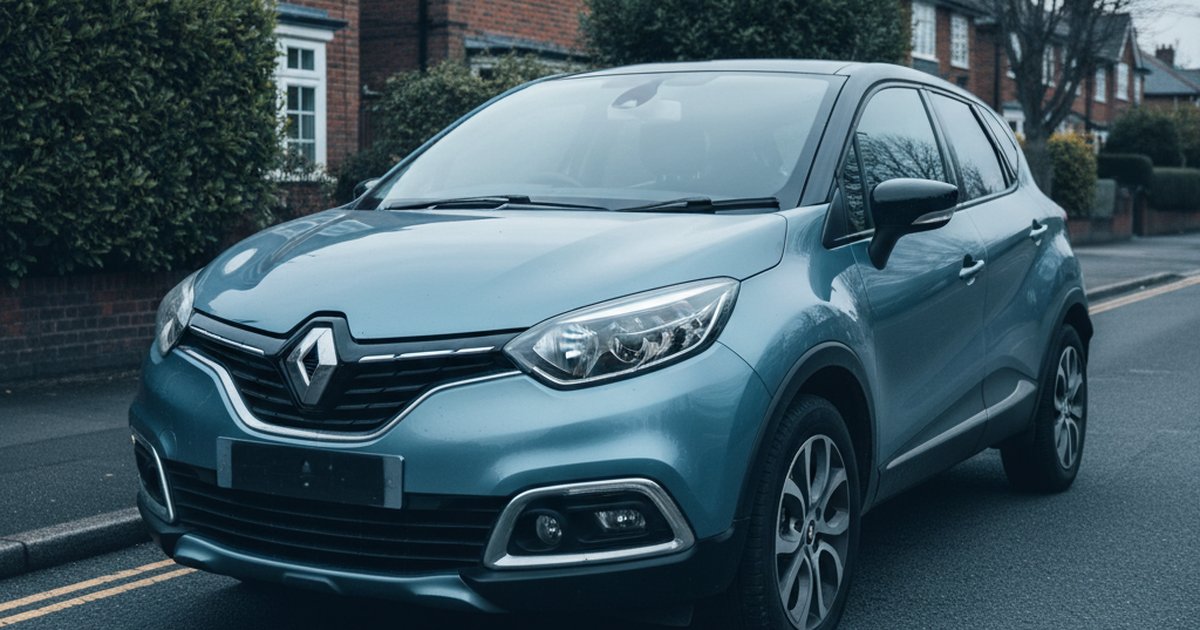
The Renault Captur arrived in 2013 as one of the first compact crossovers aimed at buyers trading up from superminis. Eleven years and 1,093,312 MOT tests later, we can see exactly how this French rival to the Nissan Juke and Peugeot 2008 has held up in British ownership.
Our analysis covers 135,492 Capturs tested between 2013 and 2022. The main finding? Petrol versions consistently outperform diesels across every model year, and the newest examples show worrying signs of premature tyre wear despite low annual mileage. The 2013-2014 diesels have particularly poor records, with some of the highest dangerous defect rates in the small crossover class.
TL;DR: Petrol Capturs from 2016-2020 offer the best reliability, with pass rates above 86% and reliability scores around 520/1000. Avoid 2013-2014 diesels completely (dangerous defect rates exceed 46%). All Capturs suffer chronic tyre wear regardless of age, suggesting suspension geometry issues from the factory.
Petrol vs diesel: which engine should you choose?
The petrol-diesel divide is stark. Across every single model year from 2013 to 2020, petrol Capturs achieve higher pass rates, better reliability scores, and lower dangerous defect rates than their diesel counterparts. The gap ranges from four percentage points to nearly nine.
Take 2016 as an example. The petrol model scores 530/1000 for reliability with an 84.9% pass rate, while the diesel manages just 485/1000 despite an identical 83.5% pass rate. The difference shows up in what fails: diesel Capturs develop brake disc problems (8.2% of tests) and structural tyre tears (not listed in top defects for petrol) at higher rates.
The ownership profile partly explains the gap. Diesel Captur owners average 6,200 to 7,000 miles annually, while petrol drivers clock 5,000 to 5,500 miles. These are not high-mileage fleet cars justifying diesel ownership. Most diesel Captur buyers chose the wrong fuel for their usage pattern, and the cars have suffered from short journeys and infrequent DPF regeneration as a result.
Key point: Every diesel Captur year from 2013-2015 has a dangerous defect rate above 37%. The 2013 diesel hits 46.6%, meaning nearly half of all examples have flagged at least one dangerous safety issue during MOT testing. This is exceptionally poor for a car barely a decade old.
Which years should you avoid?
The 2013 diesel Captur is the worst performer in the entire range. With a reliability score of just 317/1000 and a pass rate of 73.2%, it combines poor build quality with the diesel engine's unsuitability for low-mileage driving. The dangerous defect rate of 46.6% is damning. Suspension arm ball joints wear excessively (13.3% of tests), suggesting either poor component quality or accelerated wear from unrepaired minor damage.
The 2013 petrol fares better but still suffers a 42.9% dangerous defect rate, the highest of any petrol Captur. Current examples average 72,588 miles, so you are buying a car with over a decade of wear and roughly a coin-flip chance of having had a dangerous defect flagged.
All 2014 diesels should be avoided. Despite a slightly improved pass rate of 76.7%, the dangerous defect rate remains at 39.9%, and anti-roll bar linkage wear affects 12.9% of tests. The DVSA MOT history database shows these cars failing repeatedly on the same suspension components, suggesting owners are deferring expensive repairs.
The 2021 and 2022 model years have too few MOT tests (183 and 149 respectively) to draw reliable conclusions. Their quality ratings are marked LOW in our dataset for exactly this reason.
What are the sweet spot years?
The 2016-2020 petrol Capturs represent the best balance of reliability, availability, and value. All score above 490/1000, with the 2016 and 2020 models hitting 530 and 525 respectively. Pass rates range from 84.9% to 89.7%, and dangerous defect rates have dropped to 29.6% (2016) and just 8.4% (2020).
The 2017 petrol stands out as particularly strong. It achieves a 91.4% first MOT pass rate, the highest of any Captur, and maintains an 86.8% overall pass rate as cars age. With a current median mileage of just 43,426 and annual usage of 5,072 miles, these are gently driven cars in sensible hands. Average defects per test sit at 1.1, compared to 1.6 for early diesels.
The 2018-2019 petrol models offer the best value today. They have passed the steepest depreciation curve but remain young enough to avoid major age-related failures. The 2019 petrol scores 508/1000 with an 88.2% pass rate and a 14.2% dangerous defect rate, less than half the rate of 2013-2015 models. You can find these with around 33,000-41,000 miles for sensible money.
Key point: The jump in quality between 2015 and 2016 is significant. First MOT pass rates improve by 5.1 percentage points for petrol models and 5.0 points for diesels. Renault clearly addressed build quality issues in the mid-cycle refresh.
What goes wrong with the Captur?
Tyres dominate the defect list across every model year and fuel type. Between 20% and 32% of all MOT tests flag worn tyres, often described as 'worn close to legal limit' or 'worn on edge'. This is not normal wear and tear. The Captur suffers from suspension geometry that accelerates edge wear, particularly on the rear tyres.
The problem persists regardless of mileage. Even 2019 petrol Capturs, averaging just 33,704 miles and 5,393 miles annually, show tyre wear in 24% of tests. These are not high-mileage motorway cars wearing tyres evenly. Owners report uneven wear appearing within 10,000-12,000 miles, forcing premature replacement of tyres with plenty of tread depth in the centre.
Anti-roll bar linkage and ball joints are the second chronic weakness. Early diesels see ball joint wear in 10-13% of tests, often marked as 'excessively worn' rather than 'slight play'. This is expensive to fix properly, requiring new wishbones or control arms rather than standalone ball joint replacements, which Renault does not offer as separate parts on many Captur variants.
Brake components wear faster than expected. Brake pads appear in 8-9% of tests across most years, which is high for cars averaging 5,000-6,500 miles annually. Brake disc scoring and pitting affect 8.2-8.3% of 2016-2017 diesels. The Captur's modest weight (around 1,200kg) should not stress brakes this severely, suggesting either poor pad compound choices or binding calipers that Renault has never formally acknowledged.
Tyre structural failures are particularly concerning on 2016-2018 models. Between 17% and 19% of tests flag tyres with tears 'caused by separation or partial failure of structure'. This is not kerb damage or punctures. The sidewalls are failing, likely due to a combination of the tyre wear issue creating uneven loading and the fashionable large alloy wheels (17-inch on many trim levels) running low-profile rubber unsuited to British roads.
How does mileage affect Captur reliability?
Captur owners drive remarkably little. Petrol models average 5,000-5,500 miles annually across all years, while diesels manage 6,200-7,000 miles. These are second cars, urban runabouts, or retirement vehicles seeing weekend shopping trips rather than daily commutes.
Low mileage works in your favour when buying a used Captur, but only to a point. A 2016 petrol with 50,850 miles (the current median) is showing age-related deterioration, not mileage-related wear. The tyre issues, perished rubber, and corroded brake discs are all time-dependent failures that occur regardless of how much the car has been driven.
Conversely, the low annual mileage explains why diesel Capturs perform so poorly. DPF-equipped diesels need regular long runs to regenerate the particulate filter. At 6,500 miles per year, most diesel Capturs are doing 125 miles per week, which typically means short urban journeys that never get the exhaust hot enough. The result: clogged DPFs, rough running, and expensive repairs that do not show up directly in MOT data but contribute to the lower pass rates and higher defect counts.
If you are considering a diesel Captur, insist on seeing evidence of motorway use: service history showing DPF regeneration cycles, or fuel receipts suggesting longer journeys. A diesel with 70,000 miles from motorway commuting is a far better bet than one with 40,000 miles from school runs and supermarket trips.
Is the Captur worth buying used?
The Renault Captur makes sense as a used buy only if you choose the right year and fuel type. A 2017-2019 petrol model offers adequate reliability, manageable running costs, and the elevated driving position and practicality buyers want from a small crossover. You will need to budget for tyres every 12,000-15,000 miles rather than the 25,000-30,000 you might expect, but otherwise these are solid choices.
Avoid the entire diesel range unless you can find a cherished example with full service history and evidence of long-distance use. The reliability scores, dangerous defect rates, and specific failure modes (suspension, brakes, DPF issues) make diesel Capturs poor value regardless of purchase price.
Compare the Captur to rivals before buying. The Nissan Juke from the same era shows better MOT pass rates (typically 2-3 percentage points higher across equivalent years), while the Peugeot 2008 offers similar reliability but with lower tyre wear rates. The What Car? owner satisfaction surveys consistently rank the Captur below both rivals for dealer service quality, which matters when you need to address the suspension geometry causing the tyre wear.
The Captur is not a terrible car, but it is an average one with specific, predictable weaknesses. If you can live with frequent tyre replacement and accept that you are buying style over substance, a 2017-2019 petrol at the right price makes sense. Just check the MOT history for any individual car before committing, and walk away from anything showing repeat failures on the same components.
Found a year you like? A good year still hides a clocked odometer, outstanding finance or a past write-off. Before you hand over any money, check the exact Renault Captur.
Frequently asked questions
Are Renault Capturs reliable in the UK?
Petrol Capturs from 2016 onwards are reasonably reliable, with pass rates of 84-90% and reliability scores of 490-530/1000. Early diesels (2013-2015) are poor, with dangerous defect rates above 37% and reliability scores as low as 317/1000. Chronic tyre wear and suspension issues affect all model years.
What is the most common problem with Renault Capturs?
Premature tyre wear affects 20-32% of all MOT tests across every model year. The suspension geometry causes edge wear, forcing replacement at 10,000-15,000 miles. Anti-roll bar linkage and ball joint wear is the second most common issue, particularly on 2013-2015 models.
Should I buy a diesel or petrol Renault Captur?
Buy petrol. Petrol Capturs achieve 4-9 percentage points higher pass rates than diesels across all years, with lower dangerous defect rates and fewer component failures. Most Captur owners average just 5,000-7,000 miles annually, making diesel ownership unjustifiable for typical usage patterns.
Which year Renault Captur is most reliable?
The 2017 petrol Captur achieves the highest first MOT pass rate at 91.4% and maintains an 86.8% overall pass rate with a reliability score of 522/1000. The 2020 petrol scores slightly higher at 525/1000 but has far fewer MOT tests recorded, making the 2017 the safer choice based on data volume.
How many miles do Renault Capturs typically last?
Current median mileages range from 72,588 (2013 petrol) to 19,840 (2022 petrol), with most owners covering just 5,000-7,000 miles annually. Age rather than mileage degrades Capturs. Expect 120,000-150,000 miles from a well-maintained petrol model, but budget for suspension and tyre replacement throughout ownership.
Our Verdict
The Renault Captur divides sharply into good buys and ones to avoid. Stick to 2016-2020 petrol models and you will get a practical, stylish small crossover with acceptable reliability. Stray into early diesels or pre-2016 cars and you are buying someone else's problem. Use PlateInsight to check the MOT history of any Captur you are considering. Your first 5 vehicle checks are completely free, and seeing a car's actual failure record beats guessing based on its appearance every time.
You might also like
Check Any Vehicle's Full History
MOT results, mileage timeline, AI health score, and market valuations. New users get 5 free credits.