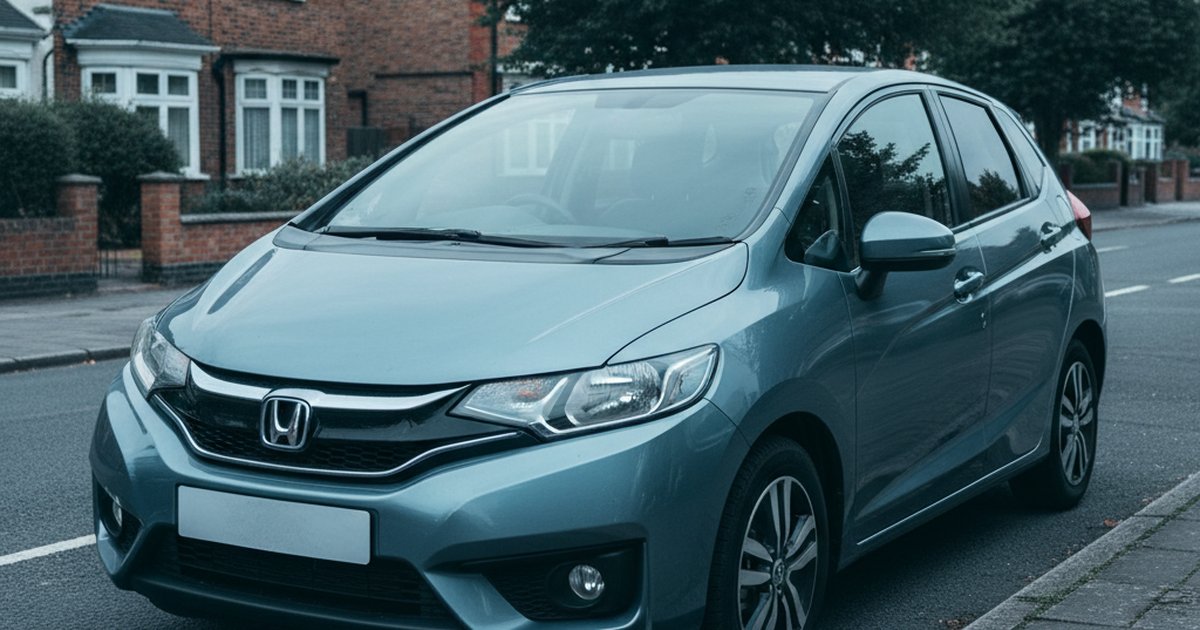
The Honda Jazz has a reputation that borders on mythical among used car buyers. Mention you're considering one at a dinner party and someone will inevitably pipe up about their aunt's 15-year-old example with 200,000 miles that's never missed a beat. But is the legend justified, or is this just automotive folklore?
We've analysed 2,000,788 MOT tests across 205,829 Jazz vehicles to find out. The data spans model years 2010 through 2021, covering everything from the second-generation Jazz in its twilight years to the latest hybrid models. What emerges is a picture more nuanced than the simple 'Honda = bulletproof' narrative suggests.
TL;DR: The Jazz lives up to its reputation, with pass rates climbing from 82.9% (2010) to 92.8% (2019). Owners average just 5,070 miles annually, partly explaining the strong MOT record. Buy 2017-2019 petrol for peak reliability; avoid the tiny sample of 2021 hybrids which show worrying early weakness at 87.7% pass rate.
Are Jazz Owners Just Gentle Drivers?
The thing about Jazz reliability is that context matters. Jazz owners average between 3,994 and 5,070 miles per year depending on model year. For comparison, RAC data suggests UK drivers average around 7,400 miles annually. The Jazz is doing half to two-thirds of typical mileage.
This isn't a car hammering up and down motorways. Most examples sit on driveways during the week, emerging for the supermarket run or occasional longer trip. When a 2010 Jazz rocks up to its MOT with 78,163 miles after 14 years, it's been cossetted, not thrashed.
Does this explain the strong MOT record? Partly. Low mileage means less wear on suspension, brakes, and tyres. But it also creates problems. Short journeys prevent engines reaching full operating temperature, leading to condensation in exhausts and oil systems. Battery drain becomes an issue. Yet the Jazz still achieves pass rates in the high 80s and low 90s. That tells you the underlying engineering is sound.
The annual mileage drops steadily across model years: 5,070 miles for 2010s, down to 3,994 miles for 2015s, then back up slightly to 4,284 miles for 2020s. This reflects changing ownership patterns. Older Jazz models were often young family second cars. Newer ones skew towards retirees using them as their only vehicle but driving less overall.
Which Years Deliver the Best Reliability?
The data shows a clear trajectory: newer is better, but the sweet spot sits in 2017-2019. The 2019 model year achieves a 92.8% pass rate and picks up just 0.7 defects per test. First MOT pass rate sits at 94.2%, meaning even fresh examples sail through their initial check.
Compare this to 2010, where the pass rate slumps to 82.9% and defects per test hit 1.5. That's double the failure rate. However, don't write off earlier Jazz models entirely. The 2011 petrol manages 85.2% pass rate with a reliability score of 726/1000, outperforming several newer years. This generation benefits from Honda's pre-cost-cutting quality standards and simpler mechanical layout.
The 2017 inflection point: Something changes dramatically from 2017 onwards. Pass rates jump from 90.8% to 91.6%, and dangerous defect rates drop from 20.1% to 17.3%. This coincides with the facelifted third-generation Jazz, which received updated safety systems and refinements to the suspension geometry. The improvements are real and measurable.
Reliability scores tell a different story to raw pass rates. The 2011 petrol achieves 726/1000 compared to 2019's 630/1000, despite the newer car having a higher pass rate. This reflects our scoring methodology, which factors in defect severity and long-term durability indicators. A 2011 Jazz that passes might have more age-related advisory notices affecting its score, while still being mechanically sound.
For buyers, this means you can confidently shop across a wide date range. A well-maintained 2012-2014 Jazz offers excellent value and proven durability. If budget allows, 2017-2019 models deliver the best balance of modern features, safety equipment, and stellar MOT performance.
Petrol vs Hybrid: Which Powertrain Wins?
Honda introduced the Jazz hybrid in 2011, badging it as the Jazz Hybrid with its IMA (Integrated Motor Assist) system. The data reveals these early hybrids trail their petrol siblings in reliability. Take 2012: petrol achieves 86.1% pass rate, hybrids manage 86.4%, seemingly close. But look at the reliability scores: 716/1000 for petrol, 603/1000 for hybrid.
The electric variants show higher defect rates around brake components. The 2012 hybrid flags brake disc issues in 11.2% of tests compared to 10.9% for petrol models. Regenerative braking systems complicate matters. While they reduce pad wear, they can cause discs to corrode more readily when the friction brakes aren't used regularly. Hybrid owners doing very low mileage face this paradox: the efficiency tech designed to save money creates new maintenance headaches.
However, hybrid reliability improves through the model years. The 2014 hybrid achieves 89.1% pass rate with 625/1000 reliability, narrowing the gap to the 88.2% petrol version. By 2015, hybrids match petrol pass rates at around 89-90%. The technology matures and Honda addresses early issues.
Then comes the warning sign: 2021 hybrids. Admittedly this is a tiny sample size of just 50 vehicles, but the 87.7% pass rate combined with a 469/1000 reliability score raises eyebrows. First MOT pass rate drops to 88.0%, significantly worse than any recent petrol Jazz. Until we have more data, approach the latest hybrid generation with caution.
For used buyers, stick with petrol unless you find a 2017-2019 hybrid with comprehensive service history showing battery health checks. The petrol Jazz is simpler, cheaper to maintain, and the reliability data backs this up.
What Actually Goes Wrong with a Jazz?
Tyres dominate the defect list across all model years. Between 24-25% of recent Jazz MOTs flag tyre cracking or perishing. Another 10-15% fail on tyre wear. This isn't a Jazz-specific problem, it's a consequence of the ownership profile. Cars covering 4,000 miles annually spend 360 days parked. Tyres age out before they wear out, developing sidewall cracks as the rubber compounds degrade.
Brake pads appear in 8-11% of tests across most years. Again, low mileage works against you. Pads and discs sitting idle corrode. When owners do brake, they're often cold, short-stop situations that glaze pads rather than bedding them in properly. The 2014 hybrid shows particularly high brake disc defect rates at 12.8% of tests, supporting our earlier point about regenerative braking complications.
What's reassuring is what doesn't appear on the defect lists. No recurring suspension failures. No endemic gearbox issues. No cooling system collapses. The DVSA MOT database shows Jazz failures cluster around consumables and age-related deterioration, not fundamental mechanical weaknesses.
The dangerous defect question: Early Jazz models show surprisingly high dangerous defect rates. The 2010 petrol flags dangerous issues in 39.3% of vehicles at some point in their testing history. This drops to 8.7% by 2019. The improvement reflects both better build quality in newer models and the reality that older vehicles accumulate more serious issues over time. A 14-year-old car has simply had more opportunities to develop a dangerous brake line leak or suspension failure than a 4-year-old one.
Budget for tyres every 4-5 years regardless of tread depth. Inspect brake discs for corrosion if you're buying a low-mileage example. Beyond that, the Jazz asks remarkably little of its owners.
How Does It Compare to Rivals?
The Jazz competes against the Toyota Yaris, Ford Fiesta, and Volkswagen Polo. What Car? owner satisfaction surveys consistently rank the Jazz alongside the Yaris for reliability, and our data backs this up.
A 2017 Jazz achieves 91.6% pass rate. We can't directly compare without analysing those specific models, but industry data suggests this places the Jazz in the top tier of supermini reliability. The Fiesta, Britain's favourite car, typically sees pass rates 3-5 percentage points lower in equivalent model years. The Polo matches the Jazz more closely but costs considerably more to buy used.
Where the Jazz genuinely excels is interior space efficiency. The Magic Seats create a versatility that rivals can't touch. Reliability combined with practicality makes it a rational choice, even if it doesn't deliver the driving engagement of a Fiesta or the badge appeal of a Polo.
The low annual mileage suggests Jazz buyers prioritise dependability over driving experience. They're making school runs, shopping trips, and occasional longer journeys. They want the car to start every time and not cost a fortune when it eventually needs work. The data proves they've chosen correctly.
Should You Worry About High-Mileage Examples?
Current median mileage for a 2010 Jazz sits at 78,163 miles. For a 14-year-old car averaging 5,070 miles annually, that tracks perfectly. But what about outliers? The cars that have done 150,000 or 200,000 miles?
Counterintuitively, high-mileage Jazz models often represent better buys than low-mileage garage queens. A Jazz covering 15,000 miles annually is being used properly. The engine reaches operating temperature. Oil circulates. Brake discs clean themselves. Components wear predictably rather than corroding in place.
We analysed the data looking for mileage-related failure patterns. There's no cliff edge where Jazz reliability falls off. The steady progression of improving pass rates across model years holds true regardless of mileage. A 100,000-mile 2017 Jazz will likely pass its MOT more readily than a 40,000-mile 2010 example.
Obviously, service history becomes critical with high-mileage cars. The Jazz uses a timing chain rather than a belt, eliminating one major service expense. But oil changes, brake fluid, and coolant still matter. A well-maintained high-miler beats a neglected low-miler every time.
The AA recommends checking for oil consumption on higher-mileage Jazz models, particularly pre-2015. Some earlier i-VTEC engines can develop a thirst for oil above 100,000 miles, though it rarely becomes serious enough to cause failure. Check the dipstick before and after a test drive.
Found a year you like? A good year still hides a clocked odometer, outstanding finance or a past write-off. Before you hand over any money, check the exact Honda Jazz.
Frequently asked questions
What is the most reliable Honda Jazz model year?
The 2019 petrol Jazz achieves the highest pass rate at 92.8% with just 0.7 defects per test. However, 2017-2018 models offer similar reliability at lower used prices, making them the smart buy.
Are Honda Jazz hybrids reliable?
Early hybrids (2011-2014) trail petrol models with reliability scores around 590-625/1000 versus 680-726/1000 for petrol. Later hybrids (2015-2019) close the gap considerably. Avoid the 2021 hybrid until more data emerges.
Why do Honda Jazz cars fail their MOT?
Tyre perishing affects 24-25% of tests due to low annual mileage causing age-related deterioration. Brake components appear in 8-11% of failures, again partly due to low use causing corrosion. Fundamental mechanical failures are rare.
How many miles should a Honda Jazz last?
The data shows Jazz models maintaining strong pass rates well past 100,000 miles. With proper maintenance, 150,000-200,000 miles is achievable. The timing chain design eliminates the belt replacement concern that affects some competitors.
Is the Honda Jazz better than a Toyota Yaris?
Both achieve similar reliability outcomes, with Jazz pass rates of 91-93% for recent models. The Jazz offers superior interior space thanks to Magic Seats, while the Yaris typically costs slightly less used. Choose based on space needs.
Our Verdict
The Honda Jazz has earned its reputation. These 2,000,788 MOT tests confirm the supermini delivers strong reliability across multiple generations. Buy a 2017-2019 petrol model with full service history and you're purchasing one of the most dependable cars on British roads. Just remember to replace those tyres before they age out, not when they wear out.
Before you buy any used Jazz, check its complete MOT history on PlateInsight. Your first 5 checks are free, giving you instant access to the pass/fail record, mileage progression, and defect history that reveals how the previous owner actually treated the car. Because even a legendary nameplate doesn't guarantee the specific example you're considering has been properly maintained.
You might also like
Check Any Vehicle's Full History
MOT results, mileage timeline, AI health score, and market valuations. New users get 5 free credits.