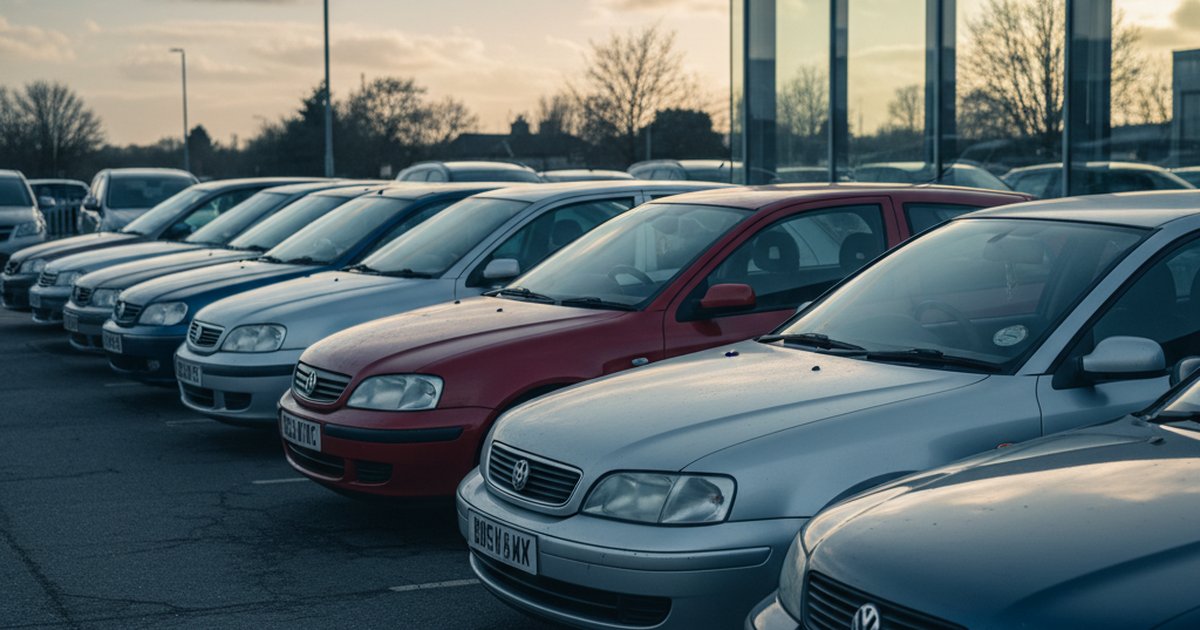
We've analysed 392,067 MOT tests across 54,579 vehicles to settle the reliability debate once and for all. Some brands consistently ace their MOTs while others struggle from year three onwards.
This isn't about subjective owner surveys or dealer reputation. This is DVSA data showing exactly which manufacturers build cars that pass MOT tests year after year. The results will surprise you.
TL;DR: Aston Martin dominates with pass rates above 95%, while budget brands like Aixam struggle in the mid-70s. Italian sports cars (Abarth, Alfa Romeo, Alpine) perform surprisingly well considering their reputation. The gap between best and worst is a 23 percentage point chasm in pass rates.
What does the reliability score actually measure?
Our reliability score runs from 0 to 1000, combining pass rate, defect frequency, and severity of issues found. A car scoring 700+ is exceptional. Anything below 400 suggests you'll be visiting the garage more often than you'd like.
These aren't arbitrary numbers. A reliability score of 750 means the car passes MOTs consistently, rarely develops dangerous defects, and picks up fewer advisory items per test. A score of 300 means frequent failures, multiple defects per visit, and a higher chance of dangerous issues that require immediate attention.
The data spans multiple model years and body styles, giving us a clear picture of each manufacturer's engineering quality. When an Aston Martin Vanquish scores 757 and an Aixam Crossline manages just 102, that's not coincidence. That's fundamental engineering.
Which brands top the reliability charts?
Aston Martin sits at the summit with pass rates consistently above 95%. The Vanquish achieves a 97.5% pass rate across 851 tests, with a reliability score of 757. These are Sunday cars, averaging under 1,000 miles annually, but the quality is undeniable.
Alpine punches above its weight. The A110 variants cluster around 90% pass rates despite being driver-focused sports cars. The Premiere Edition manages 91.8% across 609 tests with a reliability score of 590. For a car with proper performance capability, that's impressive.
Abarth surprises many. The 124 Spider models dominate the upper ranks, with pass rates between 90-92% and reliability scores in the high 500s to low 600s. Yes, they're fussy about tyres (expect regular replacements), but the fundamentals are sound. These are Mazda MX-5s underneath, which explains the solid MOT performance.
The Adria anomaly: Motorhomes score well (92.8% pass rate for 2018 models) but rack up minimal mileage at around 3,000 miles per year. They're not driven hard, which flatters the statistics.
Alfa Romeo occupies the middle ground. The Stelvio SUV from 2020 hits 91.6% with a reliability score of 614, but older Giulietta and MiTo models from 2014-15 struggle in the high 70s. There's a clear generational improvement in Alfa's quality control.
Where do the statistics reveal problems?
Aixam sits at the bottom with catastrophic numbers. The 2014 Crossline achieves just 74.1% pass rate and a reliability score of 102. That's a 26% failure rate, with 2.1 defects flagged per test on average. The dangerous defect rate hits 43.1%, meaning nearly half of these vehicles have had at least one dangerous issue identified.
Older Alfa Romeo city cars tell a grim story. The 2014 MiTo diesel manages 74.2% with 2.4 defects per test and a 52.3% dangerous defect rate. By 2015, the petrol MiTo fares little better at 77.3%. Coil spring failures plague these cars (17.4% of tests on 2014 models), alongside predictable tyre and brake issues.
The pattern is clear: budget-oriented Alfa models from the mid-2010s age poorly. The Giulietta diesel from 2014 scores 78.8% with 1.8 defects per test, while the petrol version manages 82.6%. These aren't terrible numbers, but they're a world away from the 90%+ pass rates achieved by premium rivals.
Do expensive cars actually last longer?
The data suggests yes, with caveats. Aston Martins pass at 95%+ partly because they're barely driven. The DB11 averages 2,400 miles annually. The Vanquish manages just 846 miles per year. These aren't daily drivers experiencing motorway slogs and urban stop-start abuse.
Compare that to the Alfa Romeo Giulia diesel variants doing 8,000-9,000 miles annually. The 2017 diesel Giulia covers 8,626 miles per year and achieves 83.0% pass rate with a dangerous defect rate of 46.4%. High mileage reveals weaknesses faster.
Mileage matters: The 2017 Alfa Stelvio diesel averages 9,330 miles per year and achieves 87.4% pass rate. The petrol equivalent does 6,912 miles annually and hits 89.4%. Lower use equals better MOT outcomes.
Alpine offers a fairer comparison. A110 owners average 2,400-3,100 miles annually, similar to Aston Martin usage patterns, yet score 5-10 points lower on reliability (500-590 vs 650-750). The engineering gap is real, even when controlling for usage.
What about first MOT performance?
First MOT pass rate (at age three) reveals manufacturing quality before wear accumulates. Aston Martin leads here too, with 96%+ first-time pass rates across the range. The DBS 2020 hits 96.7%, as does the Vanquish 2018.
Abarth's first MOT numbers expose tyre quality issues early. The 695 from 2019 passes just 82.8% of first MOTs despite a respectable 88.9% overall rate. By test two and three, pass rates improve as owners wise up to the tyre demands. The 595 EsseEsse 2020 manages 86.8% first time, climbing to 89.5% overall.
The gap between first MOT and overall pass rate tells you about degradation speed. Alfa Romeo's 2017 Giulietta diesel posts 89.4% first time but drops to 84.4% overall. That's a 5-point slide. The 2016 diesel version falls from 84.5% to 81.4%. These cars age poorly.
Aixam's first MOT numbers are damning. The 2015 Crossline achieves just 75.0% at age three, falling to 77.8% overall. The 2014 model posts 70.6% initially, dropping to 74.1%. These vehicles arrive at their first MOT already struggling.
Which defects plague each brand?
Tyre wear dominates across all brands, but the patterns differ. Abarth and Alfa Romeo models consistently flag worn tyres in 25-35% of tests. The Alfa Giulia diesel 2018 hits 41.8% with worn tyres, the highest in the dataset. These Italian cars chew through rubber, particularly on inner edges suggesting alignment issues.
Brake disc and pad wear follows predictable patterns. Higher-performance models replace pads and discs more frequently. The Alfa Stelvio diesel variants flag brake issues in 40-50% of tests when you combine disc and pad failures. That's expensive maintenance every MOT cycle.
The Aixam weakness: Brake pipe corrosion appears in 10.5% of 2016 Crossline tests and 10.4% of 2014 models. That's a critical safety defect, not routine maintenance. Poor material quality or inadequate protection.
Suspension components separate premium from budget. Alfa's older MiTo and Giulietta models suffer suspension arm bush wear in 12-20% of tests. The 2014 MiTo diesel logs suspension issues in 17.5% of tests. Aston Martins rarely record suspension problems (under 2% of tests), suggesting superior component specification.
Coil spring failures plague budget Alfas. The 2014 MiTo diesel records broken springs in 19.8% of tests. The 2014 petrol version hits 17.4%. The 2014 Abarth 500 reaches 17.7%. Cheap springs, harsh roads, brittle metal. An expensive fix that shouldn't happen.
How do sports cars compare to everyday models?
The Abarth 124 Spider outperforms the 595 hot hatch despite being a convertible sports car. The 2019 124 Spider auto achieves 92.3% pass rate with 604 reliability score. The 2019 595 hatch manages 87.1% with 462 score. Lower annual mileage partly explains this (3,248 miles vs 5,178 miles), but build quality differs too.
Alfa's performance models fare better than mainstream variants. The 4C supercar achieves 91.2-91.5% pass rates across model years with reliability scores around 650. The Giulia saloon (not the QV) manages 86-90% depending on year. The humble Giulietta struggles at 84-88%. Flagship models get better quality control.
Alpine's A110 achieves 89.5-91.8% across variants despite being pure sports cars. The Premiere Edition posts 91.8% with 590 reliability score while covering just 2,428 miles annually. For comparison, the cooking Alfa Giulietta 2020 petrol does 90.0% at 5,371 miles per year. The Alpine isn't just a weekend toy performing well through light use, it's genuinely well-engineered.
Should you avoid diesel variants?
The diesel penalty is real in this data. Alfa Romeo diesels consistently score 3-5 percentage points lower than petrol equivalents across identical model years and body styles.
The 2017 Giulia diesel achieves 83.0% pass rate with reliability score 485. The 2017 petrol Giulia hits 86.8% with 557 score. That's a 72-point reliability gap. The diesel dangerous defect rate sits at 46.4% versus 30.2% for petrol. Nearly half of diesel Giulias have flagged dangerous issues at some point.
Giulietta follows the same pattern. The 2017 diesel posts 84.4% pass rate and 510 reliability score. The petrol equivalent achieves 86.9% and 552. The 2016 diesel manages just 81.4% with dangerous defects in 43.8% of tests, while the petrol hits 84.8% with 36.0% dangerous rate.
High mileage exacerbates diesel problems. The Stelvio diesel variants cover 9,000-9,500 miles annually versus 7,000-7,500 for petrols. More miles means more stress on DPF systems, EGR valves, and turbochargers. The complexity hurts reliability.
The sole exception: Adria motorhomes. Diesel variants perform identically to their rarity (there are no petrol motorhomes in this data). But motorhomes aren't stressed like passenger cars.
What changes between older and newer models?
Alfa Romeo shows clear generational improvement. The 2020 Giulia manages 90.0% pass rate and 552 reliability score. The 2016 version achieves 88.4% and 644 score despite lower mileage. Wait, that's backwards. The 2016 model actually scores higher on reliability despite being older.
This reveals a quirk in the data: newer cars haven't accumulated enough test history to expose long-term weaknesses. The 2020 Giulia has mostly first and second MOTs logged. The 2016 version has up to eight tests per vehicle, exposing cumulative degradation.
The Abarth 595 demonstrates true degradation. The 2020 model achieves 88.5% pass rate with 481 reliability score at 4,865 miles annually. The 2016 version manages 82.3% and 446 score at 5,108 miles per year. That's a 6.2 percentage point drop and 35-point reliability decline for essentially the same car with four extra years of age.
Aston Martin bucks this trend through minimal use. The 2018 Vanquish (97.5% pass rate) and 2017 Vanquish (95.3%) differ by just 2.2 points. Ultra-low mileage preserves these cars regardless of age.
How often do dangerous defects appear?
Dangerous defect rates vary wildly. Aston Martin sits below 5% across the range. The DBS 2020 logs dangerous defects in just 1.9% of tests. The DB11 2020 hits 2.0%. These cars rarely develop issues requiring immediate roadside prohibition.
Alfa Romeo diesels tell a different story. The 2017 Giulia diesel records dangerous defects in 46.4% of tests. The 2016 version hits 56.1%. Over half of these cars have flagged a dangerous defect at some point in their MOT history.
What constitutes dangerous? Usually brake pipe corrosion, severely worn brake discs, fractured suspension components, or compromised steering. The Aixam Crossline 2014 achieves a 43.1% dangerous defect rate, largely from corroded brake pipes appearing in 10.4% of tests.
The Abarth 695 from 2017 posts a 23.8% dangerous rate despite respectable overall pass rate of 88.4%. Shock absorbers develop oil leaks (9.9% of tests), which can compromise handling suddenly. Not something you want in a 180bhp hot hatch.
The diesel danger zone: Alfa diesel models from 2014-2017 consistently post dangerous defect rates above 40%. One in two will eventually flag something serious. Petrol equivalents sit at 30-35%, still high but notably better.
Want to see this for a specific car? Its full MOT history, advisories and health score are free to check.
Frequently asked questions
Which car brand has the highest MOT pass rate in the UK?
Aston Martin achieves the highest pass rates, with models like the 2018 Vanquish posting 97.5% across 851 tests and a reliability score of 757. However, these cars average under 1,000 miles annually. For cars with normal usage, Abarth 124 Spider variants (91-92% pass rates at 3,000+ miles/year) offer the best combination of reliability and real-world driving.
Are diesel cars less reliable than petrol on MOT tests?
Yes, consistently. Across identical Alfa Romeo models, diesels score 3-5 percentage points lower on pass rates and show dangerous defect rates 10-15 points higher than petrol versions. The 2017 Giulia diesel achieves 83.0% pass rate versus 86.8% for the petrol, with dangerous defects in 46.4% versus 30.2% of tests.
What's a good MOT pass rate for a used car?
Anything above 85% is acceptable, 90%+ is excellent. Cars passing below 80% will cost you in repairs. The gap between 90% and 75% might sound small, but it represents a 300% increase in failure rate (10% vs 25%). That's the difference between occasional fixes and annual garage visits.
Do expensive cars really last longer?
Partly, but usage matters more than price. Aston Martins achieve 95%+ pass rates but cover under 2,500 miles annually. Alpine A110s do similar mileage and score 89-91% pass rates, 5-10 points lower. The engineering gap exists, but light use flatters the statistics significantly.
Which defects appear most often on Italian cars?
Tyre wear dominates, appearing in 25-40% of Alfa Romeo and Abarth MOT tests. The Alfa Giulia diesel 2018 flags worn tyres in 41.8% of tests, mostly inner edge wear suggesting alignment issues. Brake disc and pad wear follows (15-25% of tests), then suspension bush degradation on older models (12-20% on 2014-2016 Alfas).
Our Verdict
The MOT data reveals what brochures hide: some brands engineer for the long term, others optimise for the showroom. Aston Martin and Alpine prove that sports cars can be reliable when built properly. Alfa Romeo's generational quality gap shows improvement is possible. And Aixam demonstrates that price-cutting has consequences.
Before you buy any used car, run the registration through PlateInsight. Our database covers 261 million MOT records, giving you instant visibility of that specific vehicle's test history, not just generic model statistics. You get 5 free vehicle checks to start. That's enough to vet your shortlist and avoid someone else's expensive mistake.
You might also like
Check Any Vehicle's Full History
MOT results, mileage timeline, AI health score, and market valuations. New users get 5 free credits.