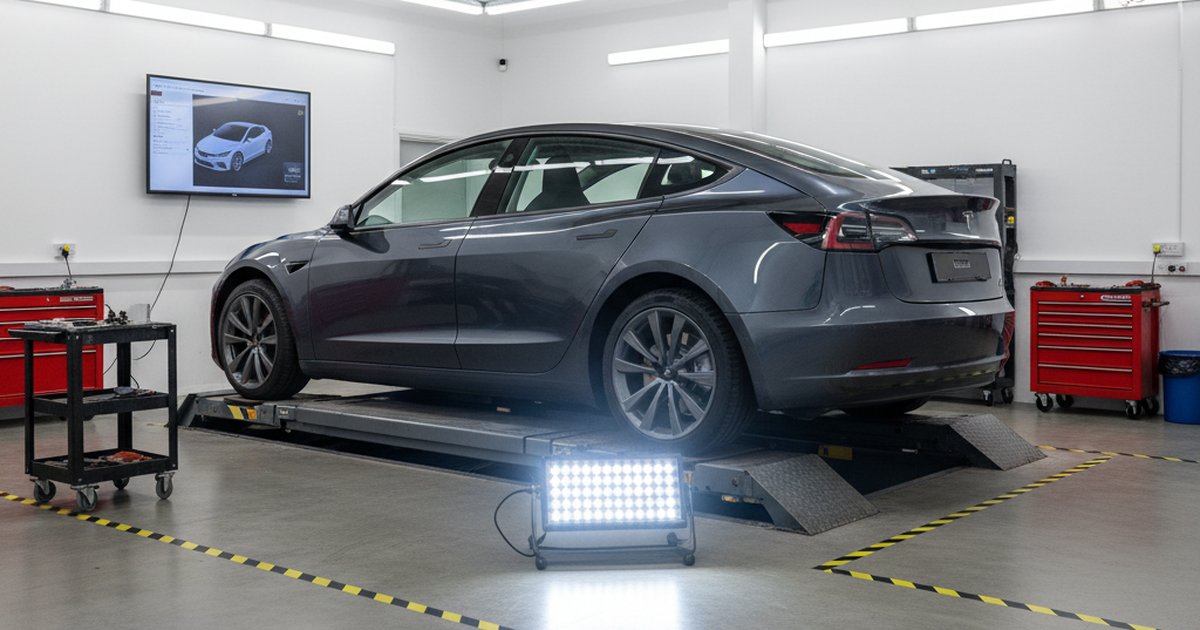
Emissions failures catch buyers off guard. A car can look pristine, drive smoothly, and still fail its MOT because of exhaust problems you can't see or smell. Repairs run into hundreds or thousands. We analysed 7,326,912 MOT tests across 40 popular car variants to find out which models are heading for an expensive surprise and which sail through year after year.
The results are stark. The worst offender fails emissions tests at a rate 133 times higher than the best. Diesel Fiestas and petrol Peugeot 208s dominate the failures list, while premium German diesels barely register a problem. But the story behind the numbers matters more than the league table. Understanding why certain cars fail helps you avoid expensive mistakes when buying used.
TL;DR: Peugeot 208 petrol models from 2012-2014 have emissions failure rates of 6-7.3%, while diesel Ford Fiestas hit 8%. VW Golfs, BMW 3 Series, and Audi A3 diesels fail at just 0.06-0.1%. Catalytic converter replacement costs £300-£1,500, DPF issues run £300-£2,500. Check for engine warning lights, excessive smoke, and DPF regeneration service history before buying.
Worst Cars for This Defect
Best Cars for This Defect
Why Do Petrol and Diesel Cars Fail Differently?
The MOT emissions test works differently for petrol and diesel engines, which explains why certain fuel types dominate our failure lists. Petrol cars are tested for carbon monoxide (CO) levels and lambda sensor readings, which measure fuel mixture efficiency. Diesel cars face the smoke opacity test, which checks for visible particulate emissions.
Petrol failures typically stem from worn catalytic converters, faulty lambda sensors, or incorrect fuel mixture caused by engine management problems. The DVSA MOT database shows these issues cluster around the 50,000-60,000 mile mark on problem models like the Peugeot 208, which averages just 5,750 miles annually. That means owners are hitting critical mileage at 9-10 years old, when emissions components are degrading but the car still feels 'young' in terms of use.
Diesel failures concentrate on DPF (diesel particulate filter) blockages and excessive smoke from worn injectors or turbocharger oil leaks. The Ford Fiesta diesel models in our data average 8,200 miles yearly, hitting 70,000-80,000 miles by their first failure spike. DPFs need regular motorway runs to regenerate properly. City-driven diesels like these Fiestas don't get that chance, leading to costly blockages.
Key difference: Petrol failures are usually component wear you can predict by mileage. Diesel failures depend heavily on driving style and whether previous owners understood DPF maintenance. This is why checking service history for DPF regeneration is critical when buying a used diesel.
Which Cars Should You Avoid for Emissions Reliability?
The Ford Fiesta diesel leads our failure data with an 8% emissions defect rate, but the Peugeot 208 petrol variants aren't far behind at 7.03-7.33%. These aren't rare statistical flukes. We're looking at tens of thousands of actual defects across hundreds of thousands of tests.
The worst performers share a few things in common. They're predominantly high-mileage-per-year diesels (Fiestas averaging 8,200 miles annually) or low-mileage petrol cars (208s at 5,750 miles yearly). The diesels accumulate carbon deposits faster with high mileage. The petrols develop catalytic converter issues because infrequent use means emissions systems never reach optimal operating temperature.
They're also budget-focused models where manufacturers fitted emissions equipment to minimum specifications. The Peugeot 2008 appears three times in our worst 20, with defect rates of 4.64-6.24% depending on year. Set that against premium models and the engineering gap is obvious.
And many worst performers share PSA Group (Peugeot-Citroën) origins or Ford EcoBoost technology. The Peugeot 208, 2008, and 5008 models use similar engine architectures and emissions systems. When a design has inherent weaknesses, they propagate across the range. Ford's diesel Fiestas across 2013-2016 show consistent 4.5-8% failure rates, suggesting systemic rather than year-specific issues.
The Nissan X-Trail petrol models from 2016-2018 are outliers in the worst list. These are newer vehicles with lower mileage (35,000-45,000 miles) but already showing 4.5-6.2% emissions failure rates. That's a warning sign about long-term durability for what should still be relatively fresh cars.
What Makes German Diesels So Clean?
The 20 best performers for emissions reliability are almost exclusively German diesels. VW Golf, BMW 3 Series, Audi A3, and Mercedes models occupy 17 of the top 20 spots, with defect rates between 0.06% and 0.13%. The gap between these and the worst performers is enormous.
These cars aren't babied garage queens either. The VW Golf 2013-2016 diesels average 8,400-8,500 miles annually and carry median mileages of 60,000-72,000 miles. The BMW 3 Series examples sit at 66,000-87,000 miles with 8,800-9,100 miles yearly. They work hard but keep passing emissions tests.
What explains the gap? Better engineering is the obvious answer, but specifics matter. Premium diesels use higher-quality catalytic converters with more precious metal content, improving longevity. Their lambda sensors and EGR valves are built to tighter tolerances. DPF systems are larger and more sophisticated, with active regeneration strategies that work even with mixed driving patterns.
Service intervals matter too. Owners of £25,000-£40,000 cars are more likely to follow manufacturer service schedules religiously. They use correct-specification oil (critical for DPF health) and address warning lights promptly. Budget hatchback owners are more likely to skip services or use cheap oil, and emissions system longevity suffers accordingly.
The data shows this clearly through our overall reliability rankings. The VW Golf diesel scores 634-662 reliability points across model years. The Ford Fiesta diesel manages just 291-376. That 300-point gap represents real-world durability differences you can measure in repair bills.
Buyer advantage: German diesel premiums hurt at purchase but pay back through emissions reliability. A three-year-old Golf diesel costs £2,000-£3,000 more than an equivalent Fiesta diesel. But you avoid the £1,000+ DPF replacement risk the Fiesta carries.
How Do the Best and Worst Compare Side by Side?
Looking at the extremes reveals just how wide the emissions reliability gap runs between good and bad choices.
| Car | Defect Rate | Median Mileage | Reliability Score |
|---|---|---|---|
| Worst Performers | |||
| Ford Fiesta 2014 Diesel | 8.01% | 71,418 | 315/1000 |
| Peugeot 208 2013 Petrol | 7.33% | 47,480 | 471/1000 |
| Peugeot 208 2012 Petrol | 7.03% | 48,836 | 445/1000 |
| Peugeot 2008 2014 Petrol | 6.24% | 45,872 | 470/1000 |
| Nissan X-Trail 2018 Petrol | 6.23% | 35,842 | 471/1000 |
| Best Performers | |||
| VW Golf 2014 Diesel | 0.06% | 67,316 | 660/1000 |
| BMW 3 Series 2014 Diesel | 0.07% | 74,106 | 661/1000 |
| VW Golf 2013 Diesel | 0.07% | 72,362 | 662/1000 |
| VW Golf 2015 Diesel | 0.07% | 61,100 | 648/1000 |
| Audi A3 2014 Diesel | 0.08% | 72,328 | 665/1000 |
The table tells a clear story. The worst cars fail emissions tests at rates 100-133 times higher than the best, despite similar or even lower mileages in some cases. The Peugeot 208 2013 petrol fails at 7.33% with just 47,480 miles, while the VW Golf 2013 diesel with 72,362 miles fails at 0.07%. That extra 25,000 miles should make the Golf more likely to have emissions problems, but superior engineering flips the script entirely.
Reliability scores track emissions performance closely. Every car in the top five best performers scores 648-662 out of 1000. The worst performers manage just 315-471. When we calculate reliability scores, emissions defects carry heavy weight because they're expensive and often terminal for older cars.
What Does an Emissions Failure Actually Cost to Fix?
Emissions repairs range from cheap sensor swaps to financially-unviable component replacements that effectively total older cars. The variation is huge, and you need to know the numbers before buying a used car at risk.
Lambda (oxygen) sensors are the cheapest fix at £100-£300 including fitting. These go wrong frequently on petrol engines around 60,000-80,000 miles. Not catastrophic, but irritating when they fail just after you buy the car.
Catalytic converter replacement is where costs hurt. Budget aftermarket cats start at £300-£400 plus fitting (total £500-£600), but quality varies wildly. Many cheap cats fail their next MOT because they don't contain enough precious metal to work properly. OEM catalytic converters cost £800-£1,500 depending on model, plus £200-£300 labour. For a 10-year-old Peugeot 208 worth £3,000-£4,000, a £1,100 cat replacement is economically marginal. Plenty of owners scrap the car instead.
DPF problems create the biggest bills. Professional DPF cleaning costs £300-£600 if caught early. But if the filter is too far gone, replacement is the only option. Genuine DPF units run £1,000-£1,500 for mainstream brands, £1,500-£2,500 for premium makes, plus £300-£500 fitting. Some garages offer DPF delete services (removing the filter entirely), but this is illegal and will cause an instant MOT fail. The DVSA is cracking down on DPF deletes with increasingly sophisticated emission tests.
Our data shows diesel Ford Fiestas hitting emissions problems at 70,000-80,000 miles with 8% defect rates. At that mileage, the car's worth £5,000-£6,000. A £2,000 DPF replacement makes no sense. This explains why so many end up scrapped or sold with 'advisories' to unsuspecting buyers who face the bill six months later.
Hidden risk: Private sellers know emissions problems are coming but sell before the MOT fails. Always check MOT history for emissions advisories like 'DPF showing signs of restriction' or 'excessive smoke under load'. These are pre-failure warnings.
What Actually Causes Cars to Fail Emissions Tests?
Understanding failure mechanisms helps you spot problem cars before you buy them. Six issues dominate emissions failures, each with telltale signs.
Worn catalytic converters reduce conversion efficiency over time. Precious metals degrade, internal honeycomb structures break down, and exhaust gases pass through without proper treatment. Causes include engine oil consumption (oil residue coats the cat), failed lambda sensors feeding incorrect fuel mixtures, and thermal cycling from short journeys. Signs: slight power loss, worse fuel economy, occasional sulfur smell from exhaust.
Faulty lambda sensors give incorrect air-fuel mixture readings to the ECU, causing overly rich or lean running that creates excess emissions. These fail from age and heat exposure. Signs: fluctuating idle, hesitation on acceleration, check engine light with P0130-P0167 fault codes.
DPF blockages happen when particulate matter accumulates faster than the regeneration cycle can burn it off. City driving, short journeys, and wrong oil specifications cause this. Signs: loss of power, increased fuel consumption, DPF warning light, strong diesel smell during attempted regeneration.
Engine management system faults affect fuel injection, ignition timing, or EGR valve operation. Vacuum leaks, failed MAF sensors, or stuck EGR valves create incorrect combustion that produces excess emissions. Signs: rough idle, misfires, check engine light, black smoke on acceleration.
Incorrect fuel mixture from fuel system problems (failing injectors, low fuel pressure, intake leaks) creates rich or lean conditions that emissions equipment can't compensate for. Signs: hard starting, hesitation, visible black smoke (too rich) or backfiring (too lean).
Carbon build-up in intake systems, particularly on direct-injection petrol engines, restricts airflow and disrupts fuel atomisation. This is increasingly common on modern turbocharged petrols like the Nissan X-Trail units in our data. Signs: gradual power loss, increased fuel consumption, rough idle that worsens over time. Walnut blasting to clean intake valves costs £300-£500 but fixes the problem permanently.
When Do Emissions Problems Typically Start?
The mileage at which emissions defects appear varies dramatically between good and bad cars. Our data captures the median mileage when defects are most commonly recorded, showing clear patterns.
Worst performers show problems early. The Ford Fiesta 2014 diesel hits 8% emissions defects at 71,418 miles. The Peugeot 208 petrol models fail at similar rates by 47,000-50,000 miles. These aren't high-mileage failures. They're happening to cars that feel mid-life but already have degraded emissions systems.
Best performers push problems much later. VW Golf diesels from 2013-2015 average 61,000-72,000 miles but maintain 0.06-0.07% defect rates. The BMW 3 Series examples run to 74,000-87,000 miles with similarly low failure rates. At these mileages, problem cars are already scrap candidates while good ones are just getting started.
Age matters as much as mileage for emissions equipment. Catalytic converters degrade from thermal cycling regardless of distance covered. A 2013 Peugeot 208 with 48,000 miles is 12 years old. The cat has experienced thousands of heat cycles even with low annual mileage (5,750 miles yearly). Meanwhile, a 2015 VW Golf with 61,000 miles is only 10 years old at 8,473 miles yearly. The Golf is younger, has been used more consistently (better for emissions systems), and has superior components to begin with.
DPF problems are purely mileage-dependent for high-mileage diesels but age-dependent for low-mileage ones. The Ford Fiesta diesels averaging 8,200 miles yearly accumulate soot faster than they can regenerate it. By 70,000 miles (8-9 years), the DPF is saturated. But a low-mileage diesel doing 5,000 miles yearly faces a different problem. The DPF never reaches regeneration temperature, so blockages form even at 40,000-50,000 miles over 8-10 years.
The sweet spot for used diesel buying is 40,000-60,000 miles at 5-7 years old on a good model like the Golf or Qashqai. The DPF has been properly used but isn't worn out yet. Avoid low-mileage diesels (under 6,000 miles yearly) and high-mileage budget models (over 8,000 miles yearly on Fiestas, 208s) completely.
How Should You Check for Emissions Problems When Buying?
Used car emissions problems are often invisible to casual inspection. You need systematic checks to avoid buying someone else's impending MOT failure.
Start with MOT history on the DVSA website or through PlateInsight. Look for emissions-related advisories in past tests: 'exhaust emissions slightly high', 'DPF showing signs of restriction', 'engine management light intermittent', 'lambda sensor response slow'. These are pre-failure warnings. The next MOT will likely be the expensive one. Advisory notes appear years before actual failures, so check the full history, not just the last test.
Check the dashboard for warning lights during the test drive. Start the car and watch for the check engine light (MIL). It should illuminate briefly then extinguish. If it stays on, there's a fault code stored. If it doesn't light at all, the bulb might be removed to hide problems. The DPF light on diesels is usually amber and looks like an exhaust filter. If this illuminates during your test, the DPF is critically blocked.
Observe exhaust smoke colour carefully. Petrol cars should produce virtually no visible smoke when warm. Diesel smoke should be minimal and clear. Black smoke under acceleration means overfuelling (injector problems). Blue smoke on startup or deceleration indicates oil burning (worn engine or turbo). White smoke when warm suggests coolant entering cylinders (head gasket failure). Any visible smoke is a warning sign.
Rev the engine gently when stationary and check for smoke puffs. A healthy emissions system shows nothing visible. A puff of black or blue smoke indicates problems. On diesels, ask to see a DPF regeneration cycle if possible. The car should be able to actively regenerate without excessive smoke or temperature warnings.
Demand service history documentation showing DPF regeneration services, lambda sensor replacements, and use of correct-specification oil. Diesels need low-SASH oil (low sulphated ash) to avoid DPF contamination. Wrong oil causes faster blockages. If the seller has no service history or admits to using cheap oil, walk away from any diesel. The £500-£1,000 you save on purchase price will reappear as a DPF bill within months.
Use your PlateInsight free credits to check the specific variant's emissions record. A 2014 Peugeot 208 1.2 petrol showing 7.33% emissions defects in our data isn't bad luck. It's a design problem you're buying into. A 2014 VW Golf diesel sits at 0.06%. The choice is obvious for reliability-focused buyers.
Should You Buy Petrol or Diesel for Emissions Reliability?
Most buyers assume petrol is the safer bet because DPF problems get all the headlines. Our analysis shows it's more nuanced.
Petrol cars dominate the worst performers list, but it's specific models, not fuel type. The Peugeot 208 petrol variants occupy three spots in the worst 10, with 6-7.3% defect rates. The Nissan X-Trail petrol shows 4.5-6.2% failures despite low mileage. But these are outliers. Most mainstream petrol cars from Toyota, Honda, and even Ford sit at 1-2% emissions defect rates (not shown in our worst/best 20 because they're middle-pack).
Diesel cars split into two groups: premium German makes with 0.06-0.13% defect rates, and budget brands with 4-8% rates. There's no middle ground. If you buy a VW, BMW, Audi, or Mercedes diesel, emissions reliability is excellent. If you buy a Ford, Peugeot, or Nissan diesel (the X-Trail diesel is much better than the petrol, ironically), you're rolling the dice on expensive DPF problems.
For used buyers, the recommendation is clear. Buy petrol unless you need the fuel economy and can afford a premium diesel from the German manufacturers. Petrol emission failures are usually cheaper to fix (£500-£800 for a cat vs £1,500-£2,500 for a DPF), happen at higher mileages, and are easier to diagnose before purchase.
If you need diesel economy, stick to the proven models in our best performers list. VW Golf, Audi A3, BMW 3 Series, and Nissan Qashqai diesels all show sub-0.15% emissions defect rates. Pay the £2,000-£3,000 premium over budget diesels. You'll save double that in avoided repairs and the car will be worth more at resale because buyers know these models are reliable.
Avoid diesel completely if you do mostly short journeys or urban driving. Our annual mileage data shows the problem clearly: Peugeot 208 owners average 5,750 miles yearly and suffer 7.3% emissions failures. VW Golf diesel owners average 8,500 miles yearly and fail at 0.06%. The Golf's higher consistent mileage helps the DPF regenerate properly. Low-mileage diesels are maintenance nightmares regardless of brand quality.
Want to know if the car you're viewing has a history of this? Its MOT record shows every advisory and failure, free to check.
Frequently asked questions
What causes a car to fail an MOT emissions test?
Worn catalytic converters, faulty lambda sensors, blocked diesel particulate filters, engine management faults, incorrect fuel mixture, and carbon build-up in intake systems. Costs range from £100 for a lambda sensor to £2,500 for DPF replacement.
Are petrol or diesel cars more likely to fail emissions tests?
Depends on the model. Premium German diesels (VW, BMW, Audi) fail at just 0.06-0.13% rates. Budget diesels (Ford Fiesta, Peugeot) fail at 4-8%. Petrol failures vary widely by model. Peugeot 208 petrol hits 7.3%, while most mainstream petrols sit at 1-2%.
How much does it cost to fix emissions failures?
Lambda sensors: £100-£300. Catalytic converters: £500-£1,500. DPF cleaning: £300-£600. DPF replacement: £1,000-£2,500. For older cars worth £3,000-£5,000, cat or DPF replacement often exceeds economic repair viability.
Can you tell if a car will fail emissions before buying it?
Check MOT history for emissions advisories, watch for dashboard warning lights, look for visible exhaust smoke (black, blue, or white), demand DPF service history on diesels, and verify correct oil specification was used. PlateInsight shows each model's historical emissions failure rate.
At what mileage do emissions problems usually start?
Problem cars fail at 45,000-70,000 miles (Peugeot 208 at 47,000, Ford Fiesta diesel at 71,000). Good cars like VW Golf diesel run to 70,000-85,000 miles with minimal issues. Age matters too - 10-year-old cats degrade from heat cycling regardless of mileage.
Our Verdict
Emissions reliability separates good used car buys from money pits. The gap between best and worst performers is so wide that model choice matters more than condition, service history, or price. A neglected VW Golf diesel will likely outlast a pristine Ford Fiesta diesel for emissions durability.
Use the 261 million MOT records behind PlateInsight to check any car's emissions track record before you buy. We give you 5 free vehicle checks to verify the exact variant you're considering. A 2014 Peugeot 208 1.2 petrol and a 2014 VW Golf 2.0 TDI might look similar on paper, but one fails emissions 122 times more often than the other. That's the difference between a reliable car and an expensive mistake.
You might also like
Check Any Vehicle's Full History
MOT results, mileage timeline, AI health score, and market valuations. New users get 5 free credits.